Smoke Damage Cleanup

Serving all of St. Louis - West · Open 24/7 · (314) 455-5900

St. Louis - West · Open 24/7

Call (314) 455-5900Request Service

If you've experienced a fire in your St. Louis area home, you know that the damage doesn't stop once the flames are out. The aftermath can be overwhelming, with smoke and soot permeating every corner of your living space, leaving corrosive residues that can damage surfaces and persistent odors that are tough to remove. When you call United Water Restoration Group of St. Louis - West, our skilled smoke damage cleanup team is ready to respond swiftly. We understand the urgency of your situation and are committed to restoring your home. Using industry-leading techniques, we eliminate smoke odor, address both visible and hidden damage, and restore affected surfaces, ensuring your home becomes safe and habitable again. Our local expertise ensures we handle each aspect of the cleanup with sensitivity and efficiency, all while guiding you through the insurance claims process with clarity and precision.

  • 24/7 emergency response for immediate action
  • IICRC-certified technicians for quality assurance
  • Comprehensive assessment and accurate insurance documentation
  • State-of-the-art equipment for effective cleanup and deodorization
  • Local expertise in St. Louis and surrounding areas
  • Specialized techniques for different smoke residues
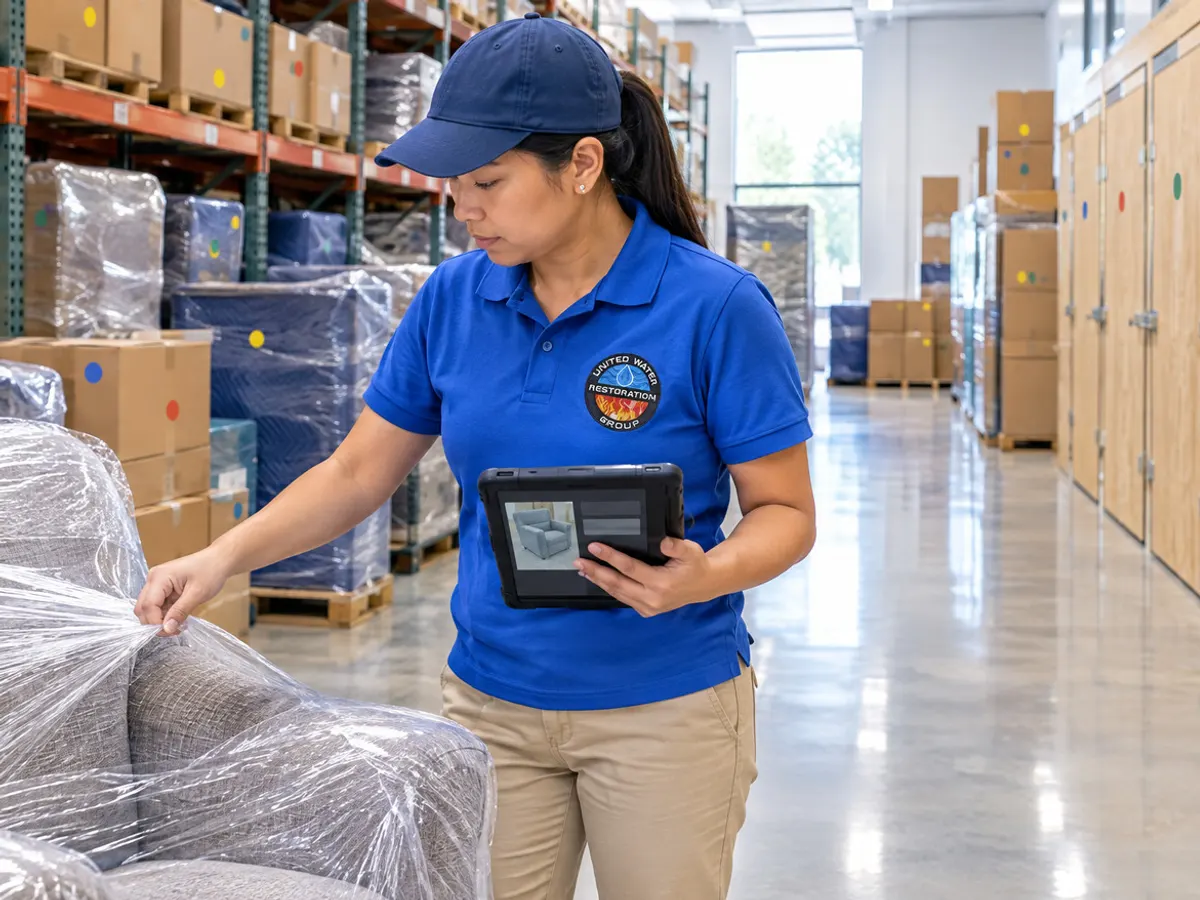
A UWRG technician logging packed-out belongings at the contents cleaning warehouse

Understanding Smoke Damage

Smoke damage is far more complex than it may initially seem, as it encompasses a range of residues and impacts that can broadly vary depending on the type and intensity of the fire. In St. Louis homes, smoke damage commonly occurs due to electrical fires, kitchen mishaps, and residential heater malfunctions. Each type of fire leaves behind distinct smoke residues, including wet smoke residue, dry smoke residue, and protein residue from kitchen fires, each of which requires a tailored cleaning approach to effectively remove.

One of the most pernicious aspects of smoke damage is the presence of smoke webs, intricate black strands that collect along the ceilings and corners of your home. These webs are not mere cobwebs covered in soot; instead, they are fine particles of smoke attracted to walls and ceilings by static electricity, creating visually striking and challenging residues to remove without specialized tools. Beyond the visible deposits, smoke damage can lead to soot etching on glass surfaces, and corrosive effects on metal fixtures and electronics, highlighting the need for immediate attention.

To effectively address these complexities, our team utilizes advanced cleaning techniques such as chem sponges capable of lifting fine soot particles without damaging surfaces, and we apply stain-blocking sealers as a preventive measure against persistent smoke stains. The overarching goal is not just to clean surface-level damage but to mitigate any potential long-term impacts, ensuring both aesthetics and safety are restored.

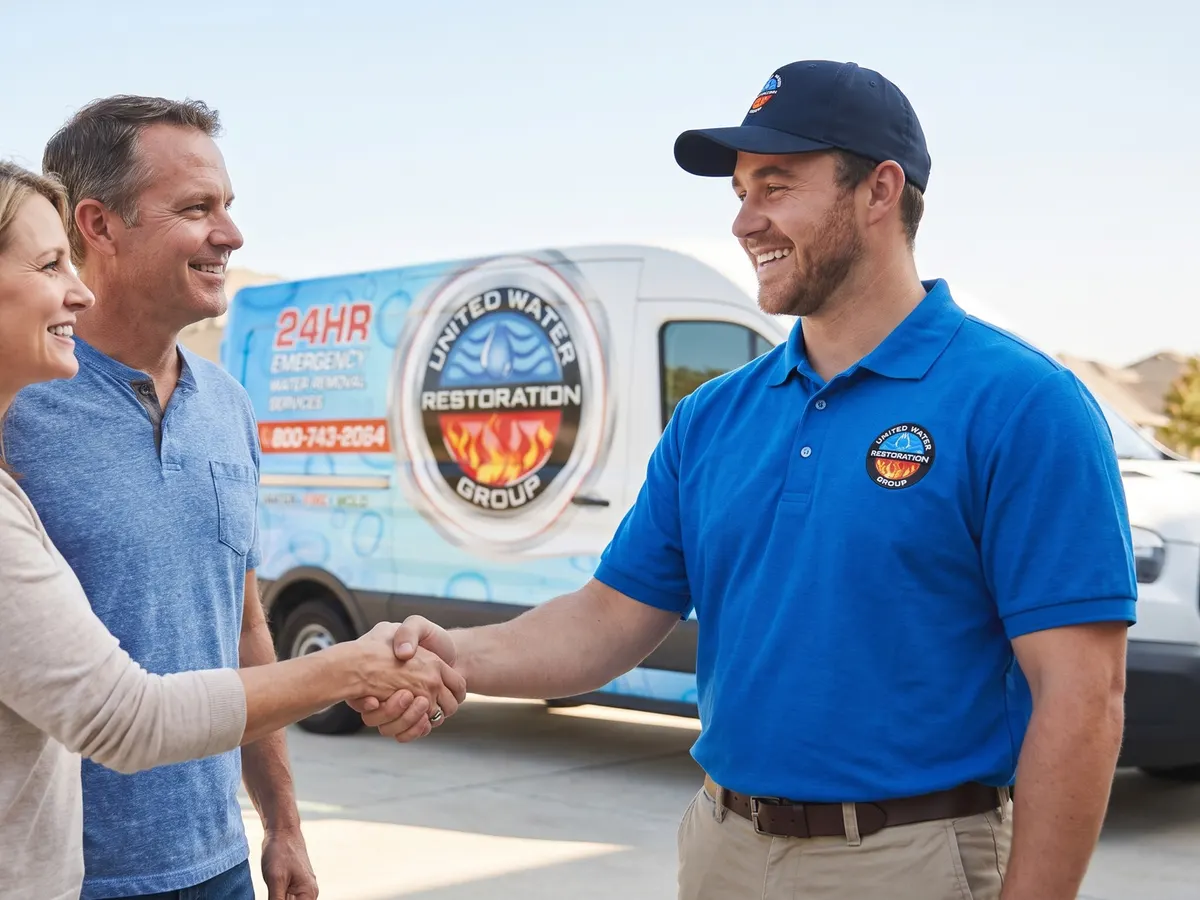
A UWRG technician shaking hands with homeowners beside the service van

Navigating the Insurance Process

Dealing with insurance claims can be daunting, especially in the aftermath of a fire when emotions and stress levels are high. At United Water Restoration Group of St. Louis - West, we understand that navigating these claims is an integral part of restoration, and we are dedicated to easing this burden by assisting you throughout the insurance process. After our team conducts a comprehensive structural assessment of your property, we meticulously document all damages for your insurance adjuster.

Photographic evidence and detailed reports are integral to supporting your claim, as they capture everything from soot etching on windows to pervasive smoke residue in your HVAC system that can go unnoticed. Our expertise with local insurance protocols enables us to facilitate smoother interactions and negotiations with your provider, ensuring that your claim receives the detailed attention it deserves.

Moreover, we handle the coordination directly with your insurance company to ensure all required documentation is accurate and submitted swiftly. This focused approach not only helps expedite the restoration process but also alleviates the stress of navigating complex claim procedures, allowing you to concentrate on returning your home to its pre-fire condition. Our proactive measures ensure that each step is clearly communicated and precisely executed to serve your best interests.

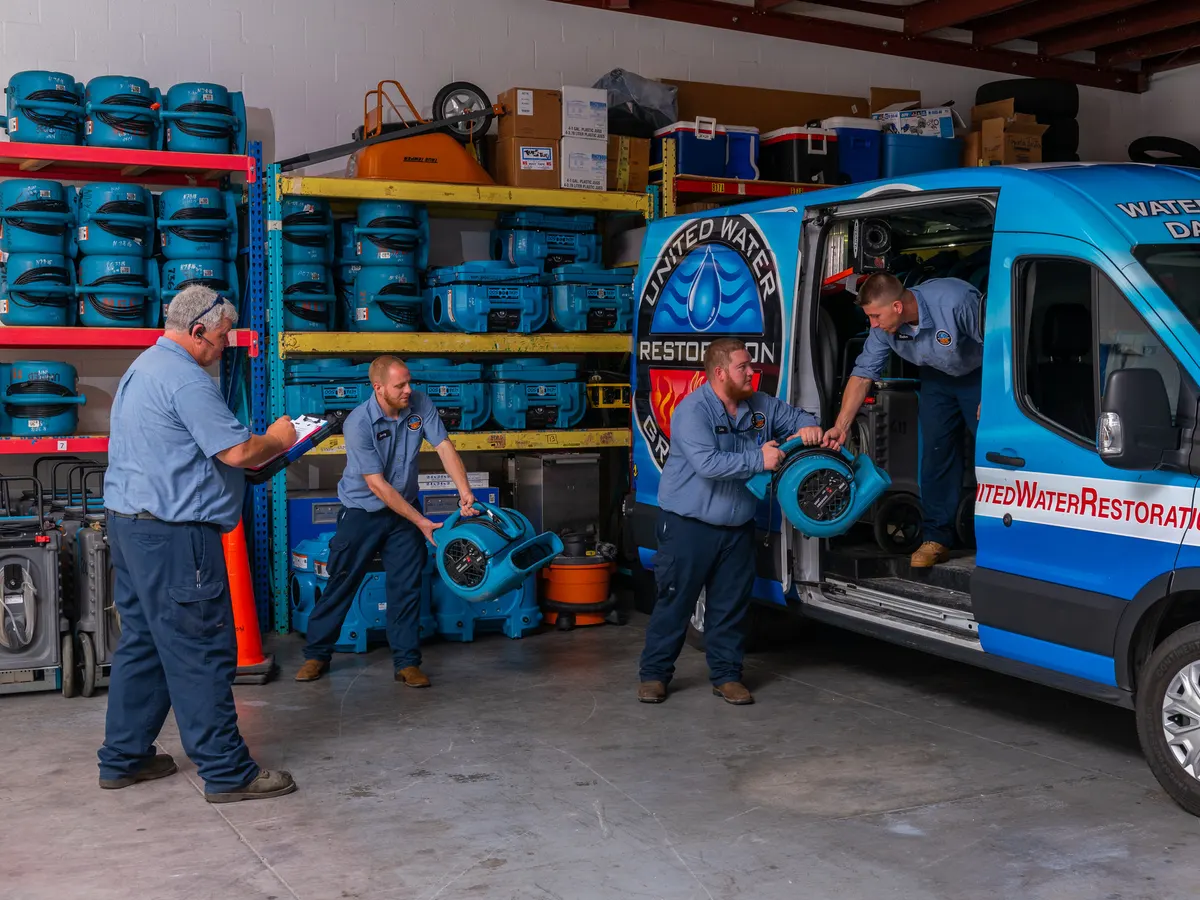
A UWRG crew loading drying equipment into a service van at the warehouse

Local Challenges and Solutions

Homes throughout the St. Louis region face unique challenges when it comes to smoke damage cleanup, influenced by varying structural materials and distinct environmental conditions. Our area, known for its charming older homes, often includes properties with atypical ventilation and insulation features compared to more modern constructions. These aspects can complicate smoke infiltration and necessitate specialized strategies for effective remediation to avoid further complications.

Our approach is adapted to these local nuances. We leverage advanced equipment such as high-capacity air scrubbers and hydroxyl generators to ensure thorough decontamination of both air and surfaces. These devices are highly effective at removing airborne smoke particles, which can linger if not addressed, and they significantly reduce smoke odor in a way that reaches deep into materials.

In addition to removing smoke particles, our procedures include specialized treatments for HVAC system decontamination, as these systems are often primary channels for redistributing residues and odors. Given the extensive effects of moisture from firefighting efforts, which can cause secondary water damage, our services include robust water extraction and dehumidification to prevent mold growth and structural damage. This comprehensive approach guarantees all facets of damage are systematically addressed, providing peace of mind alongside a restored living environment that stands resilient against future incidents.

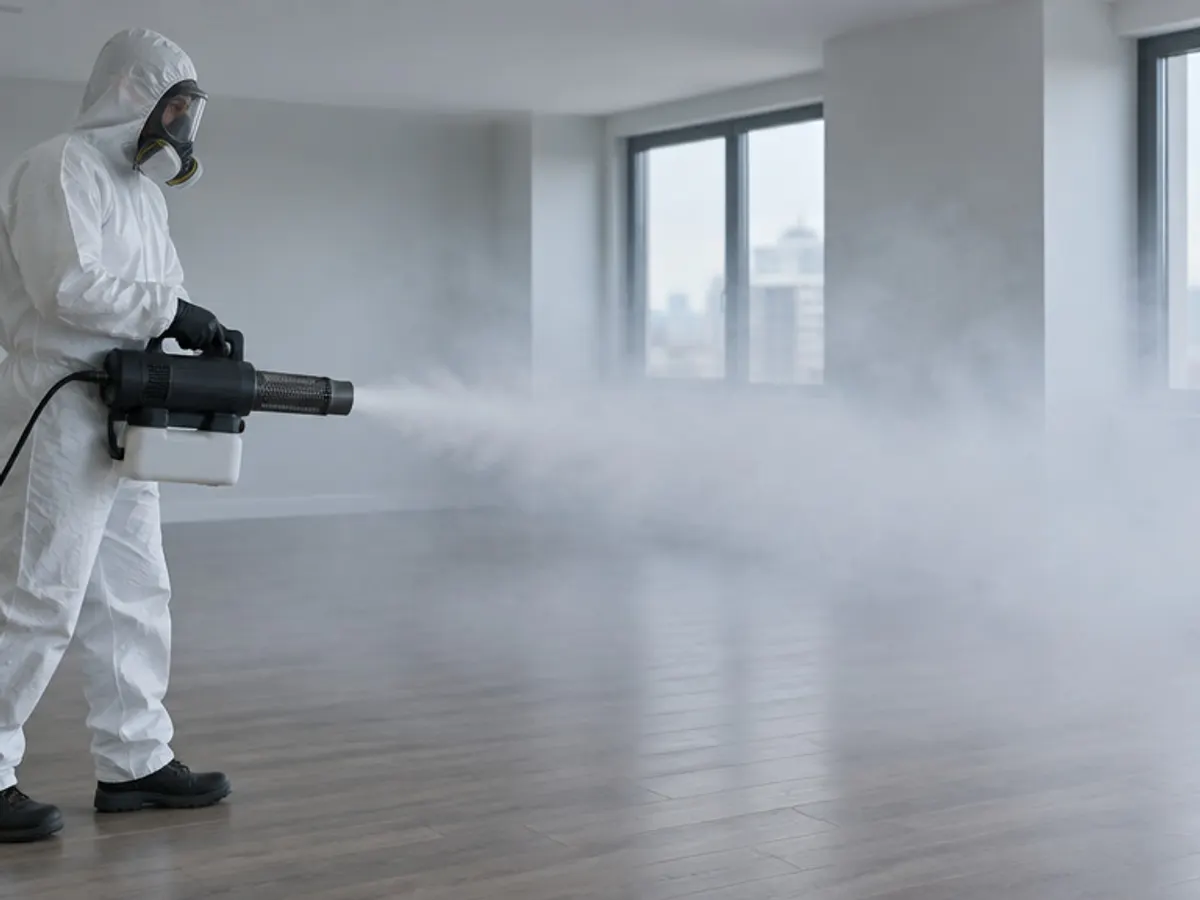
A technician fogging a room to neutralize smoke odor

Advanced Techniques for Smoke Odor Removal

One of the most difficult problems in smoke damage restoration is eliminating the lingering smoke odor that can persist long after soot has been removed. This odor is pervasive, often embedding itself into fabrics, walls, and any porous materials in the home. At United Water Restoration Group of St. Louis - West, we employ advanced deodorization techniques to tackle these stubborn odors effectively.

Techniques such as thermal fogging and ozone treatment are at the forefront of our odor removal strategy. Thermal fogging works by creating a fog-like solution that literally fills the spaces in your home, reaching into hidden corners and penetrating deeply into materials where odor particles nestle. The fog neutralizes odor molecules, delivering impressive results in spaces affected by smoke.

Additionally, ozone treatment is employed in more severe cases, working at a molecular level to break down lingering odors. This method is utilized in controlled environments, often as part of a contents pack-out process where belongings are treated in an ozone chamber. Coupled with our use of HEPA filtration systems, these methods ensure the air is cleaned to a high standard, which prevents recurrence of smoky odors, making your home safe and comfortable to return to.

Common Causes We See in St. Louis - West

  • Kitchen grease fires, leading to protein residue requiring specific cleaning techniques
  • Electrical fires igniting hidden wiring, causing both immediate smoke and long-term soot contamination
  • Chimney smoke backflow, affecting large areas of the home with both soot and odor penetration
  • Improperly extinguished candles resulting in structural smoke damage needing comprehensive cleaning
  • Space heater malfunctions igniting nearby combustibles, requiring extensive smoke odor removal
  • Fireplace sparking leading to smoke penetration throughout upper levels and requiring in-depth deodorization
  • Lightning strikes causing attic fires and associated smoke issues necessary for specialized treatment
  • Barbecue mishaps causing backyard smoke intrusion, impacting outdoor furniture and surfaces
  • Improper storage of flammable liquids leading to basement fires, with complex smoke odor challenges

While You Wait for the Crew

A few minutes of the right first moves can save thousands in damage. Here is what to do — and what not to do — before we arrive.

Do

  • Open windows for ventilation if outdoor conditions permit to reduce smoke concentration
  • Switch off HVAC systems to prevent spreading residues throughout ducts and living spaces
  • Document all damage with photos for insurance to ensure an accurate claim process
  • Remove any small valuables to prevent further damage from soot and moisture effects

Don’t

  • Do not attempt to clean soot with water; it can worsen the damage by embedding it further
  • Avoid turning on electrical appliances before they're inspected for functional safety
  • Don't enter heavily soot-damaged areas without proper protection to avoid inhalation risks
  • Refrain from using furniture or seating covered in soot to prevent skin and respiratory contact

Crews are standing by in St. Louis - West right now.

Call (314) 455-5900

How It Works

Here Is What Happens When You Call

The hardest part of property damage is facing it on your own. You do not have to — from the first phone call, it is our job, not yours.

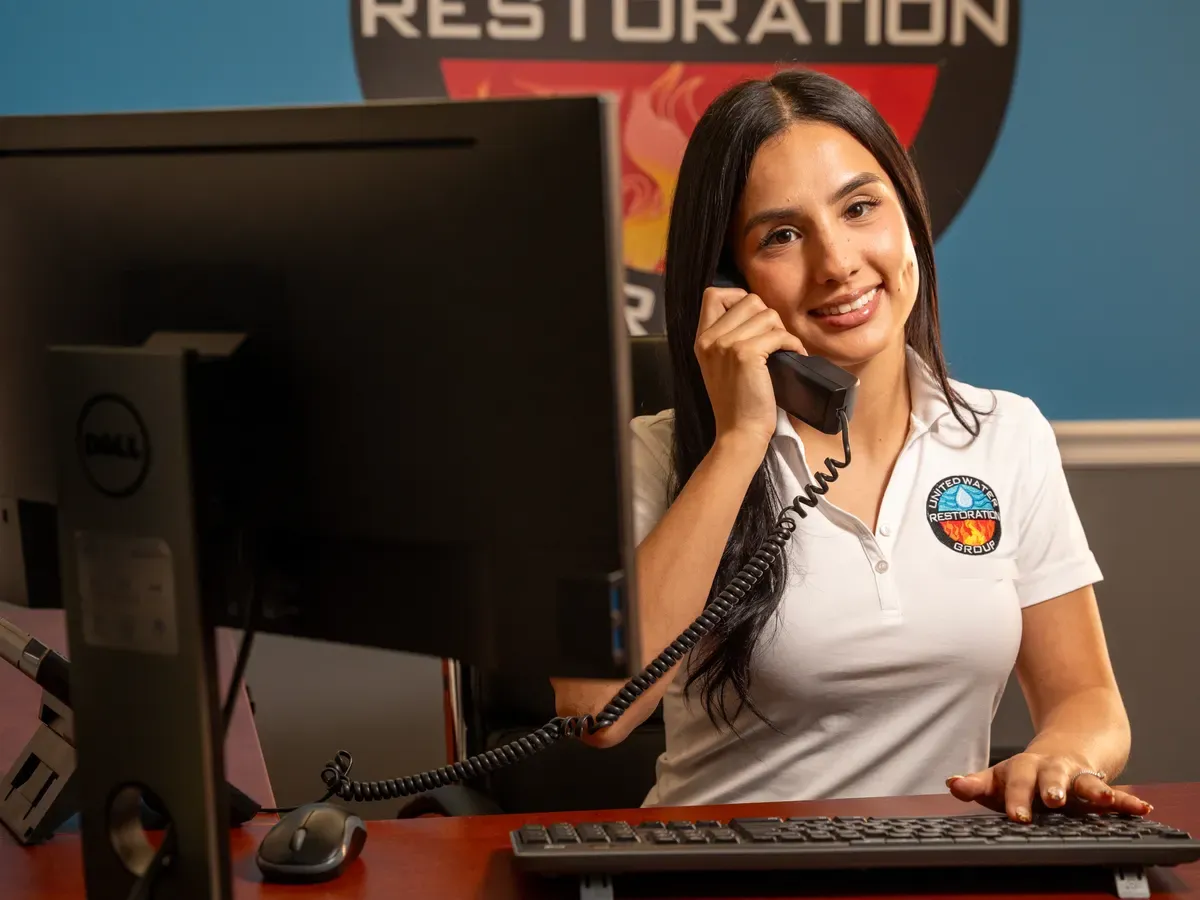
  1. A UWRG dispatcher answering an emergency call at her desk

    Step 01

    You call, a real person here answers

    Any hour, any day, your call is picked up by a real person on our St. Louis - West team — not a machine and not a national call center. We are locally owned and operated, so the people you talk to are the same people who show up at your door. From that moment, it stops being your problem to solve on your own.

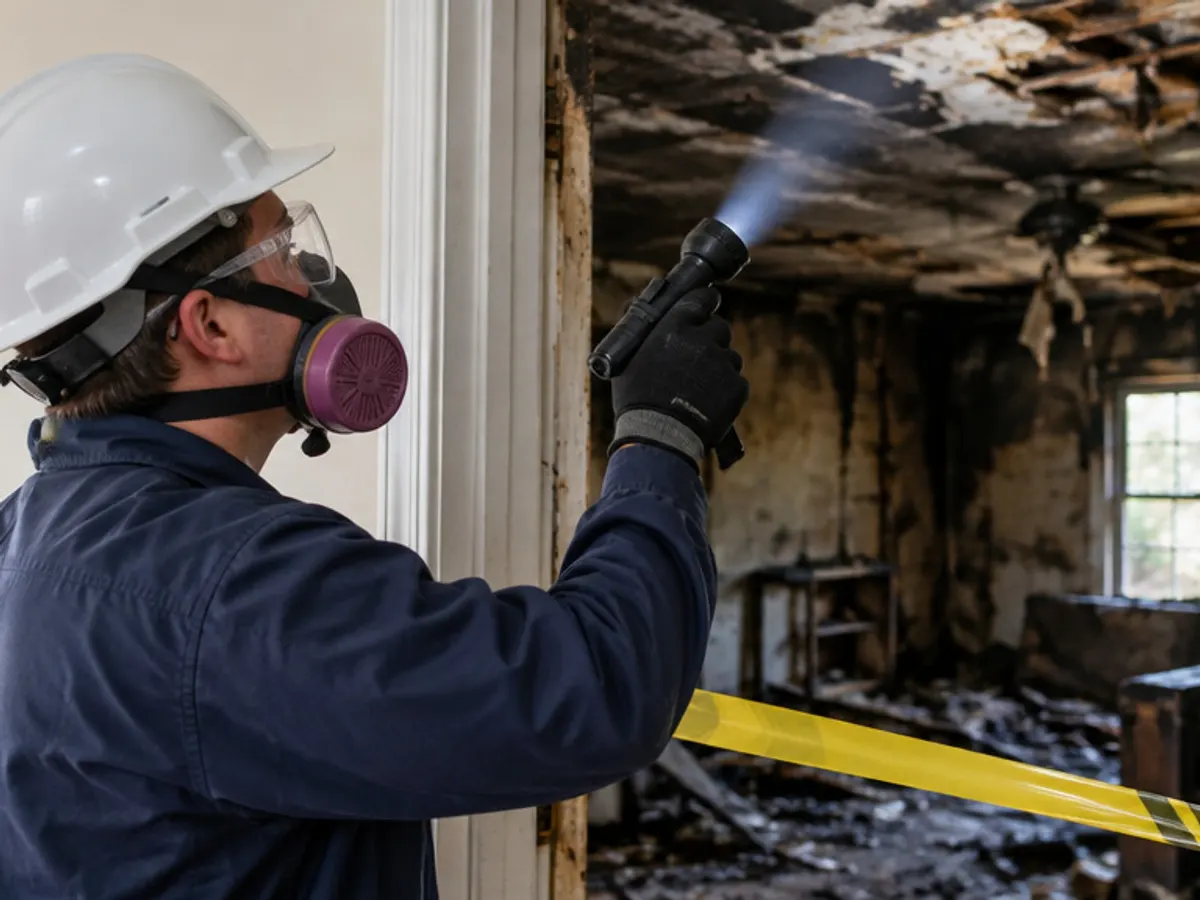
  2. A technician in a respirator inspecting a fire-damaged room with a flashlight

    Step 02

    Initial Assessment

    Our technicians conduct a thorough evaluation of your property, scrutinizing all potential smoke and fire damage. This includes assessing structural implications and taking immediate mitigation steps when necessary to ensure safety and stability of the affected areas.

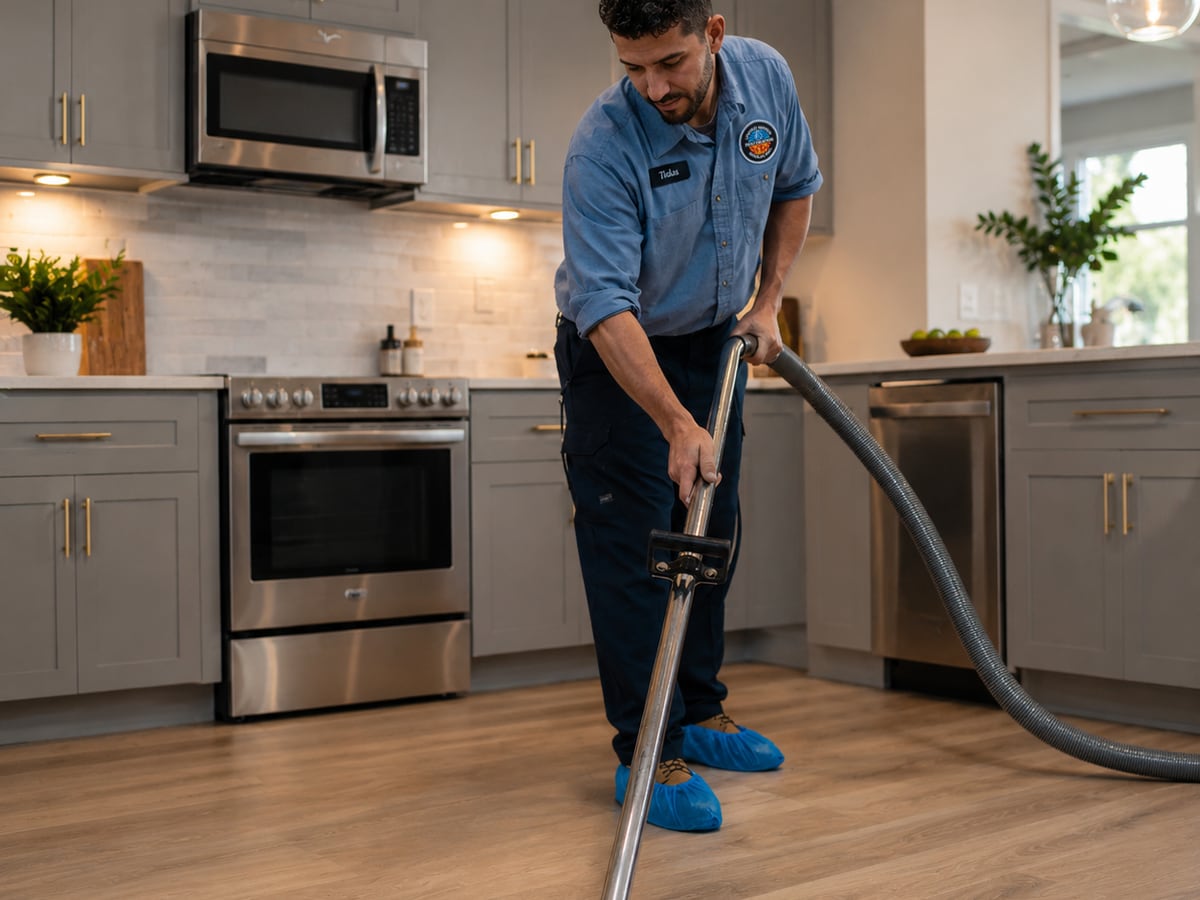
  3. A technician drawing water out of a kitchen floor with an extraction wand

    Step 03

    Securing the Property

    We perform essential board-up services and emergency roof tarping, which are crucial for securing the property from further environmental exposure. This step helps to preserve the structural integrity and maintain security during the cleanup and restoration process.

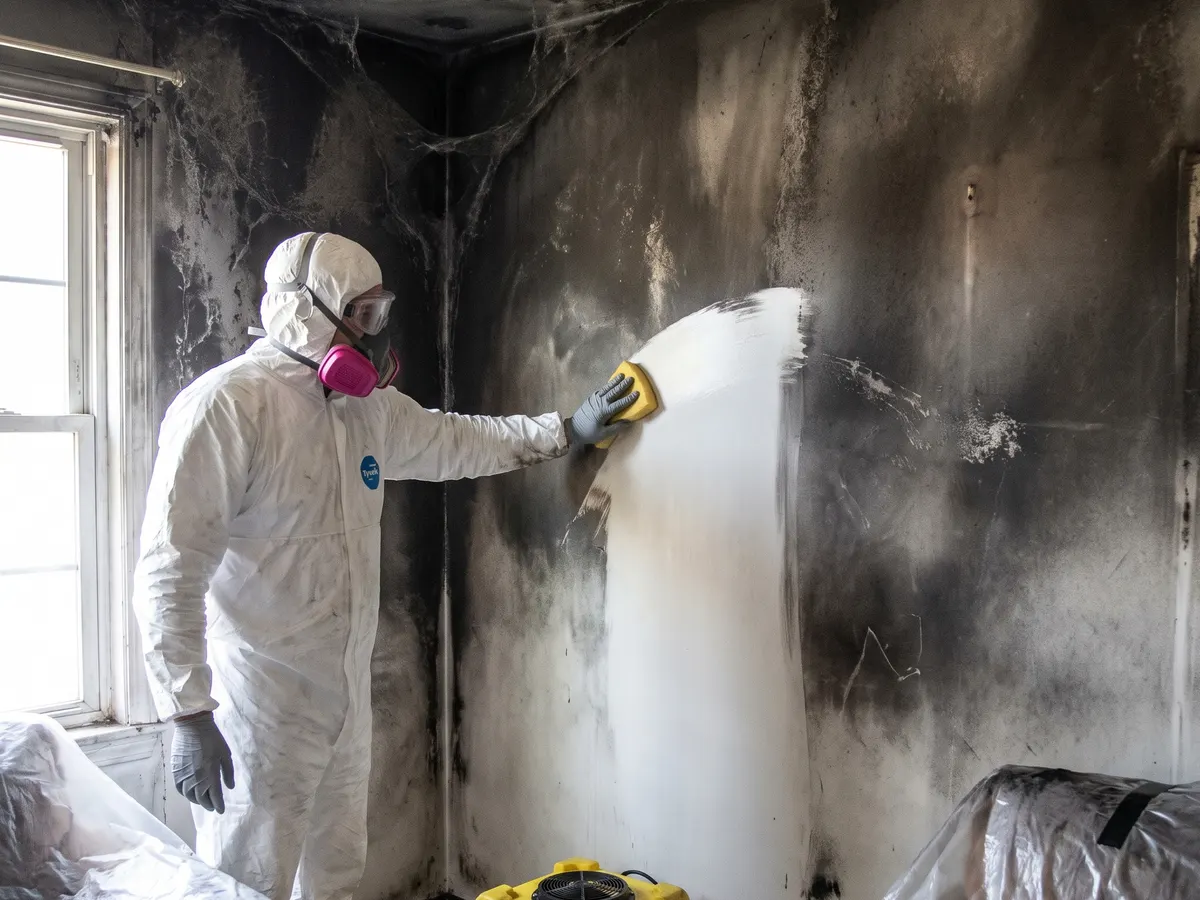
  4. A technician in protective gear sponging soot off a wall

    Step 04

    Smoke and Soot Removal

    Utilizing specialized equipment like chem sponges and industrial air scrubbers, we meticulously remove all traces of soot and smoke residues from surfaces and interior air systems. Special attention is paid to eliminating pervasive smoke webs and the difficult-to-remove dry smoke residue.

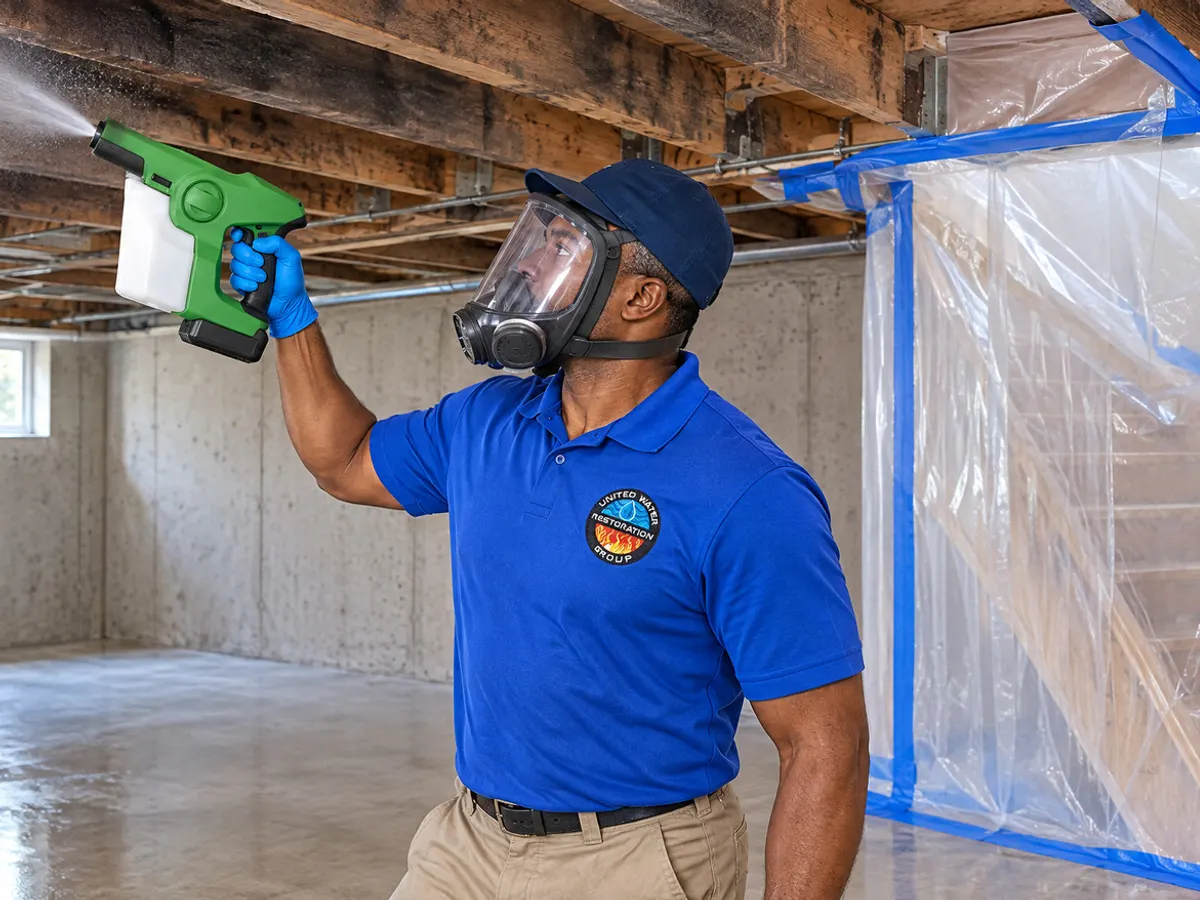
  5. A technician spraying antimicrobial treatment across exposed framing

    Step 05

    Deodorization

    We deploy odor neutralization technologies, including thermal fogging and precise ozone treatment, to eliminate persistent smoke odors. These methods penetrate deeply into materials to ensure no trace of smell remains, restoring a fresh and habitable atmosphere in your home.

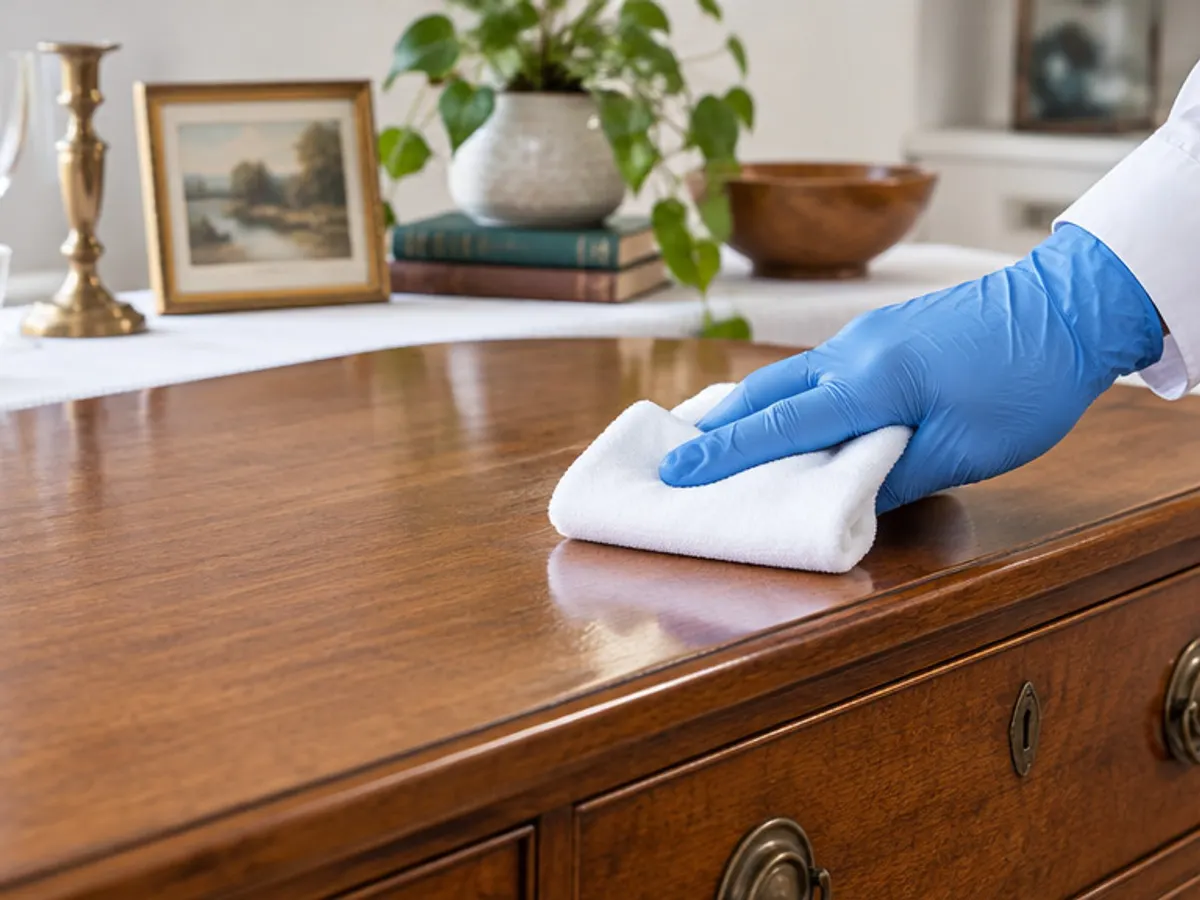
  6. A technician wiping a cleaned, restored wood table to a polished finish

    Step 06

    Restorative Cleaning

    Following deodorization, we conduct comprehensive final cleaning and apply protective coatings, such as stain-blocking sealers, to prevent any resurgence of discoloration or odors, ensuring a resilient, clean, and comfortable living space.

We Work With Your Insurance

Restoration is stressful enough without fighting through a claim alone. Our crews document everything — photos, moisture readings, and a clear scope of work — in the format adjusters expect, and we communicate with your insurance company throughout the job. You always know what is happening and what your policy covers before work begins.

AllstateState FarmLiberty MutualProgressiveNationwideFarmers InsuranceAmerican Family InsuranceChubbUniversal Property & CasualtyHeritage Insurance
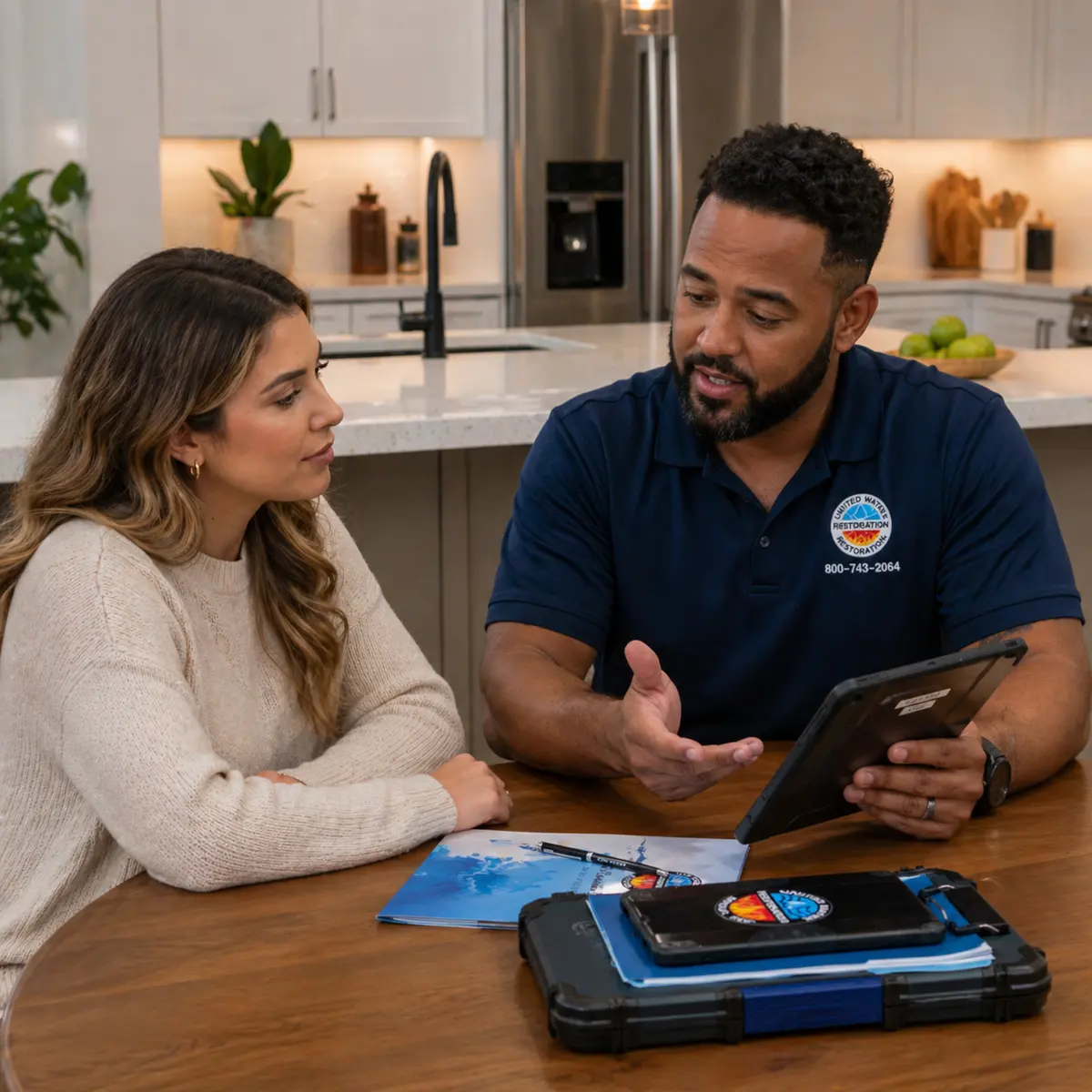
Technician walking a homeowner through the insurance scope on a tablet

What This Service Covers

Deodorization and odor neutralizationSoot and smoke residue cleaningHVAC system decontaminationStructural cleaning and restorationContents cleaning and inventoryBoard-up and tarpingCorrosion prevention on electronicsFurniture and fabric cleaningInsurance claim documentationAir quality testing and remediation

For efficient and effective smoke damage cleanup in the St. Louis area, trust United Water Restoration Group of St. Louis - West. Our certified team is available 24/7, fully equipped to tackle any smoke or fire damage challenges you face. For prompt professional service and comprehensive assistance with insurance claims, contact us today at (314) 455-5900. Rest assured knowing your home is in the hands of trusted local experts dedicated to restoring comfort and safety.

Frequently Asked Questions

Do you handle fire and smoke damage restoration, or only water damage?

Both. Fire and smoke work is its own discipline with its own standard, ANSI/IICRC S700, covering soot removal, odor control and the cleaning of surfaces flame never touched. Smoke residue sorts into four types — dry, wet, protein and fuel oil — each cleaned differently, so the scope comes from an inspection of your specific loss rather than from a list set in advance. Water damage follows a separate standard, S500, and many fire losses involve both.

Can smoke smell from cigarettes or marijuana actually be removed, or only covered up?

Masking fails because smoke odor is residue sitting on surfaces, not air. Deodorization works in four stages: remove the source material, clean every surface holding residue, treat what remains, then seal what cannot be cleaned. ANSI/IICRC S700 puts source removal before any sealing, and that holds for tobacco or cannabis alike. The EPA and CDC describe residual tobacco smoke settling into walls, carpet and dust long after the smell fades. Heavy saturation often means replacing some materials, and every house differs.

Can you keep the smell from spreading to the rest of my house while you work?

Containment comes first, before any cleaning. The work area is sealed with sheeting and held under negative pressure so air moves into the zone rather than out into the rest of the home, then exhausted through HEPA filtration, which captures 99.97 percent of particles at 0.3 microns, the hardest size to catch. IICRC S520 describes the same containment principle for mold work. How much enclosing a home needs, and how completely it holds, depends on how far residue already traveled.

How do I tell whether a smell is on the surface or coming from inside the wall?

Press a damp white cloth on a hidden patch. If residue transfers and that spot goes quiet, it was surface odor. If it returns a day or two after cleaning, or sharpens when the heating and cooling system runs, the source sits in a wall cavity, insulation or ductwork. ANSI/IICRC S700 treats odor as residue to be located, not covered, and protein residue leaves almost no visible mark while carrying strong odor, so a cloth coming back clean does not rule it out.

Is the estimate free, or do you charge to come out and inspect?

Having someone come out and look at the damage carries no charge in most cases. That visit is what sets the scope: which of the three water categories in ANSI/IICRC S500 applies, how far it migrated, and what has to be dried. A written estimate is separate work, and depending on the office, preparing one may carry a fee. You are told what is chargeable before anything is charged.

When can someone come out, and can work start on the first visit?

The phone is answered around the clock, and on that call you are given an honest arrival window for your specific address rather than a stock answer. The visit is not a sales appointment — crews carry extraction and drying equipment, so when the situation calls for it emergency work can begin on the first visit: standing water pulled out, air movers and dehumidifiers set, and the wet area mapped against a dry standard under ANSI/IICRC S500.

How much does restoration cost?

Nobody can price a loss honestly without seeing it. The number is built from measured facts: the square footage affected, how much material has to come out, the water category — 1 through 3 under ANSI/IICRC S500 — and how many days of drying equipment the structure needs. Most carriers settle water claims against Xactimate's regional price list, the same line-item data a properly written estimate uses. A contained spill and a loss that soaked three rooms are not in the same range.

What kinds of damage and cleanup do you handle?

Water damage is the bulk of the work, across all three categories ANSI/IICRC S500 defines — clean supply water, gray water, and sewage. Fire and smoke work covers soot, char and odor. Mold remediation follows IICRC S520. Storm and wind damage, contents cleaning for furniture and belongings, and the reconstruction that puts drywall, flooring and cabinetry back are all in scope, though what each office handles in-house varies. Plumbing, roofing and electrical repairs are separate trades.

Can you give me a price range over the phone, or quote from photos or a report I already have?

Photos and a report you already have are genuinely useful — bring them, they shorten the visit. What they cannot do is produce a number, because what drives the scope is moisture inside material you cannot photograph. ANSI/IICRC S500 works from meter readings against a dry standard in the same building, and from the water category: Category 1 can often be dried in place, while Category 3 means contaminated material comes out instead. A range quoted sight-unseen is a guess, and guesses move.

Do you work with insurance companies — can you bill my insurer directly, or do I pay and get reimbursed?

Direct billing to the carrier is common on covered losses, arranged once the claim number and adjuster are in hand, so you are not fronting the whole job. Carriers generally review water losses as Xactimate line items rather than a lump sum. How it runs depends on your policy — some issue payment to you and your mortgage holder rather than the contractor, which changes the paperwork but not the scope. You are told which arrangement applies before work starts.

Do I need to call a plumber first, or do you stop the leak too?

Turning the water off at the main comes first, if you can reach it safely, because that is what stops the loss from growing. Repairing the failed pipe, fixture or roof is plumbing or roofing work and usually a separate trade. Mitigation does not have to wait on that repair: ANSI/IICRC S500 treats source control and structural drying as distinct steps, so extraction and drying can start while the plumbing is still being scheduled.

What should I do right now, before the crew arrives?

Shut off the water at the main and kill power to the affected area at the breaker if you can do it from a dry spot — never standing in water. Lift what you can off wet flooring, especially anything wood, paper or upholstered, and pull rugs up. Blot or wet-vac standing water if it is clean. The clock is real: EPA guidance is that wet material dried in the first 24 to 48 hours will in most cases not grow mold.

Will I get a written estimate before work starts, and how soon after the visit?

Emergency mitigation usually starts on a signed work authorization covering extraction and drying, because waiting on paperwork while water sits makes the loss bigger. The line-item estimate follows, and when it lands depends on the size of the loss and whether a carrier is reviewing it; the office can give you a realistic date on the call. The daily moisture readings ANSI/IICRC S500 requires are what justify each line, and a scope that grows gets a revised estimate.

What are your hours — do you work nights and weekends, and does that cost more?

The phone is answered around the clock, including nights, weekends and holidays, because a loss found at night only gets worse while it sits, and on that call you are given an honest arrival window for your address. After-hours labor is a recognized line item in Xactimate, the pricing data carriers settle against, so where it applies it shows on the estimate like everything else rather than as a surprise. Whether it applies to your situation at all is said plainly up front.

If this isn't something you handle, can you point me to someone who does?

Ask on the call and you will get a direction rather than a dial tone. Some work genuinely belongs elsewhere: a plumber for the pipe itself, a roofer for the roof, an HVAC contractor for a condensate or duct problem, and for mold an independent indoor environmental professional, since IICRC S520 flags the conflict of interest when the same firm both assesses and remediates. Saying so plainly is more use to you than a visit that goes nowhere.

Does homeowners insurance cover this, and will I still owe my deductible?

Most policies cover sudden, accidental water damage and exclude damage that developed gradually, and the wording varies from policy to policy — read your own and ask your adjuster directly rather than assuming it either way. Your deductible applies regardless and cannot be waived, discounted or absorbed into the invoice. Anyone offering to do that is describing insurance fraud.

Should I call my insurance company first, or get you out first — and does the work wait for their approval?

Either order works, and many people do both back to back. What should not happen is drying waiting on a claim decision. EPA guidance puts the mold window at 24 to 48 hours for wet material, and most policies place a duty on the homeowner to prevent further damage, which is why emergency mitigation proceeds on your own authorization while the claim is still being opened. The readings and photos taken at the start are what the adjuster reviews later.

Is anything due up front, what payment methods do you take, and do you offer payment plans?

On an insurance claim the usual pattern is that your deductible is collected and the carrier's payments cover the rest as work is approved, which usually means no large sum is due before mitigation begins. Self-pay jobs are structured differently and often staged between drying and repairs. Card, check and ACH are normally accepted, some offices can arrange terms, and any processing fee is disclosed before you pay. What applies to you is in writing before you sign.

What information do you need from me to get started?

The basics are the address and how to get in, a callback number that reaches you, what you know about the source and when it started, and whether power and water are still on. If a claim is open, add the carrier, policy and claim number and the adjuster's details. Photos taken before anything was moved matter more than they look: ANSI/IICRC S500 scoping rests on documented conditions, and the earliest record cannot be recreated later.

Will you document the damage for my claim and deal with my adjuster, or do I handle that?

Documentation is part of the job, not homework for you. Moisture readings, photographs, affected material measurements and daily drying logs are produced as the work goes, because ANSI/IICRC S500 expects drying to be verified against a dry standard rather than declared. You can ask for copies of all of it. Discussing scope with an adjuster who is limiting it is normal, though the carrier makes the coverage decision and the policy sets the limits.

Is it safe for my family to stay in the house while this is going on?

That depends on what the water is and what it reached, and it is assessed first. ANSI/IICRC S500 sorts water into three categories, and Category 3 — sewage or heavily contaminated water — is treated as a containment job with restricted entry. The EPA and CDC describe mold and sewage exposure as a greater concern for infants, older adults and people with asthma or weakened immune systems. Clean-water losses confined to one area often allow normal occupancy; ask about your own rooms.

Can you still help me if I don't have insurance, or don't want to file a claim?

Self-pay customers are welcome, and plenty of people choose that route deliberately when the likely scope sits near or under their deductible or they would rather not have a claim on record. The work itself does not change — the same ANSI/IICRC S500 drying standard, the same readings, the same verification. What changes is the paperwork and the payment arrangement, which the office walks you through, including how the scope can be staged if that helps.

Request Service Online

Tell us what happened and we will call you right back. For emergencies, calling (314) 455-5900 is always fastest — we answer 24/7.

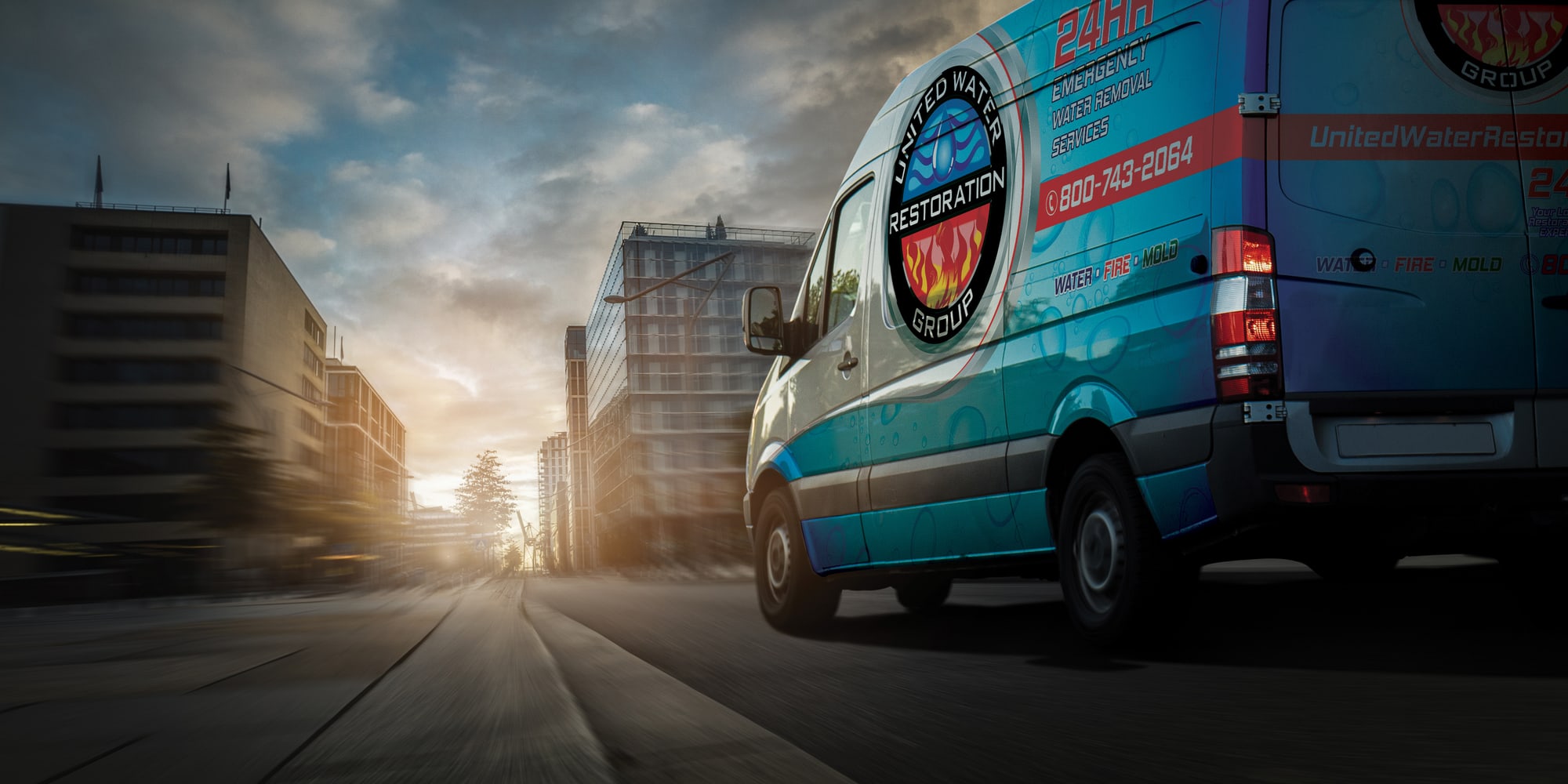
A United Water Restoration Group of St. Louis - West van heading out on an emergency call at sunset

In Case of Property Damage, Call:

314-455-5900

We answer around the clock and dispatch from right here in St. Louis.

IICRC Certified · Water · Fire · Mold · 24/7 Emergency Response