Fire & Smoke Damage Restoration

Serving all of St. Louis - West · Open 24/7 · (314) 455-5900

St. Louis - West · Open 24/7

Call (314) 455-5900Request Service

If you've recently experienced a fire in your home, whether from a small kitchen accident or a larger blaze, you’re likely feeling overwhelmed with the resulting damage. Fortunately, United Water Restoration Group of St. Louis - West is here to help residents in areas such as Ballwin and Fenton with thorough fire and smoke damage restoration services. When you call us at (314) 455-5900, our team quickly mobilizes to assess the damage, create a customized mitigation plan, and begin the restoration process to return your home to a safe, inhabitable condition. Our certified professionals are equipped to handle everything from smoke odor neutralization to electronics evaluation, ensuring comprehensive care. With our team's expertise and cutting-edge technology, we ensure swift and effective service to restore normalcy to your life.

  • 24/7 emergency response to minimize damage.
  • Certified IICRC technicians ensure quality.
  • Comprehensive insurance claim help for peace of mind.
  • Advanced equipment like hydroxyl generators for smoke odor removal.
  • Experienced with all local fire-related challenges.
  • Meticulous documentation supports your insurance needs.
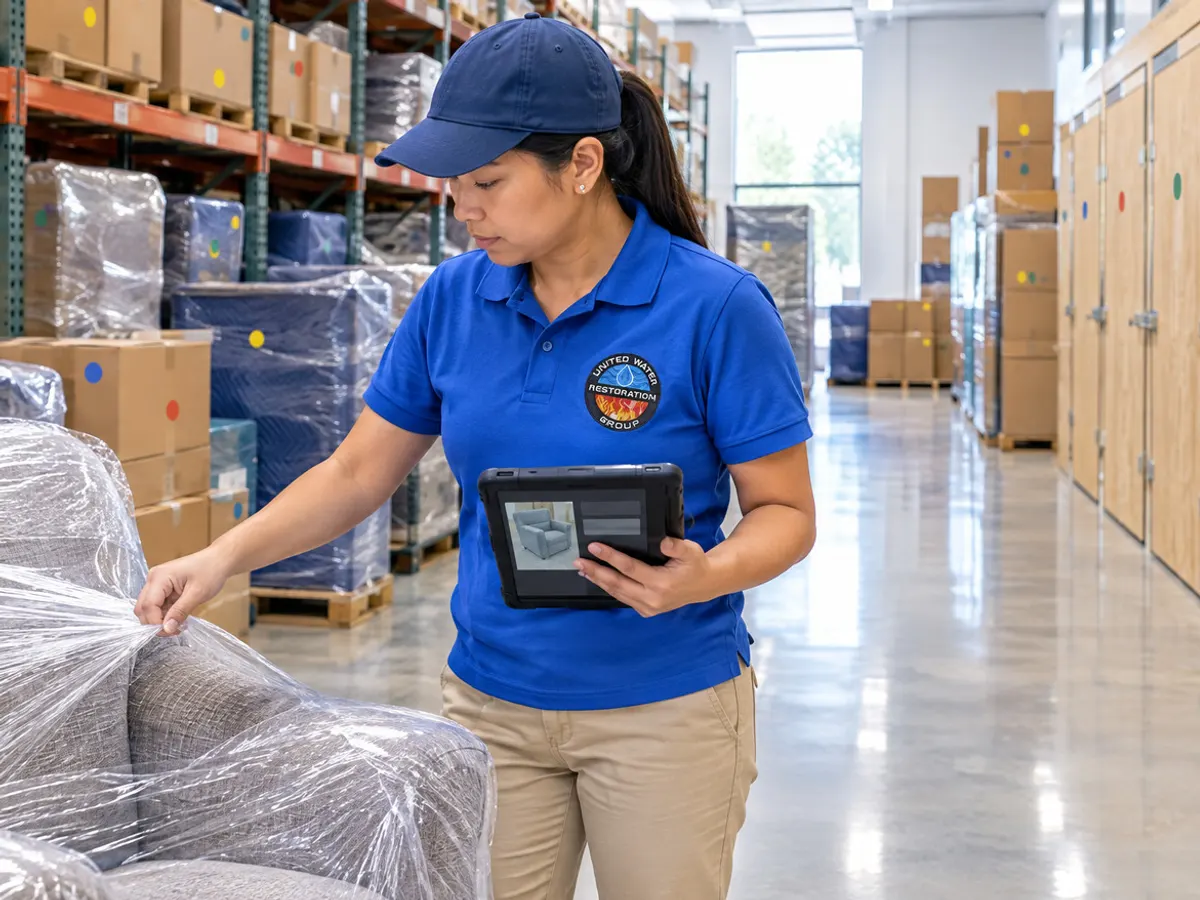
A UWRG technician logging packed-out belongings at the contents cleaning warehouse

Comprehensive Fire Damage Assessment

Upon arrival, our skilled technicians begin with a thorough assessment of the fire damage which includes evaluating the structural integrity of your home. This crucial first step identifies necessary repairs, from minor fixes involving drywall to potential structural reinforcements. Our detailed reports are not only vital for the restoration process but also provide your insurance adjuster with the documentation needed to support your claim.

In St. Louis neighborhoods like Valley Park and Chesterfield, where older homes may face increased risk of fire-related damage, this assessment is also crucial in uncovering hidden problems like compromised electrical systems or HVAC contamination. Our inspectors are equipped to identify and plan for both immediate safety hazards and longer-term restoration requirements to prevent further issues like corrosion on metals and electronics. This includes checking for acidic soot etching which can cause stains and other long-term damages if not promptly and properly treated.

We also address secondary water damage that might have resulted from firefighting efforts. Left unaddressed, this moisture can lead to mold growth and further structural damage, complicating the restoration effort. Our goal is to swiftly curb any further complications, ensuring your home’s restoration is as efficient as possible. Furthermore, we provide ongoing assessments throughout the restoration process to track progress and amend strategies as necessary, ensuring thorough and precise recovery.

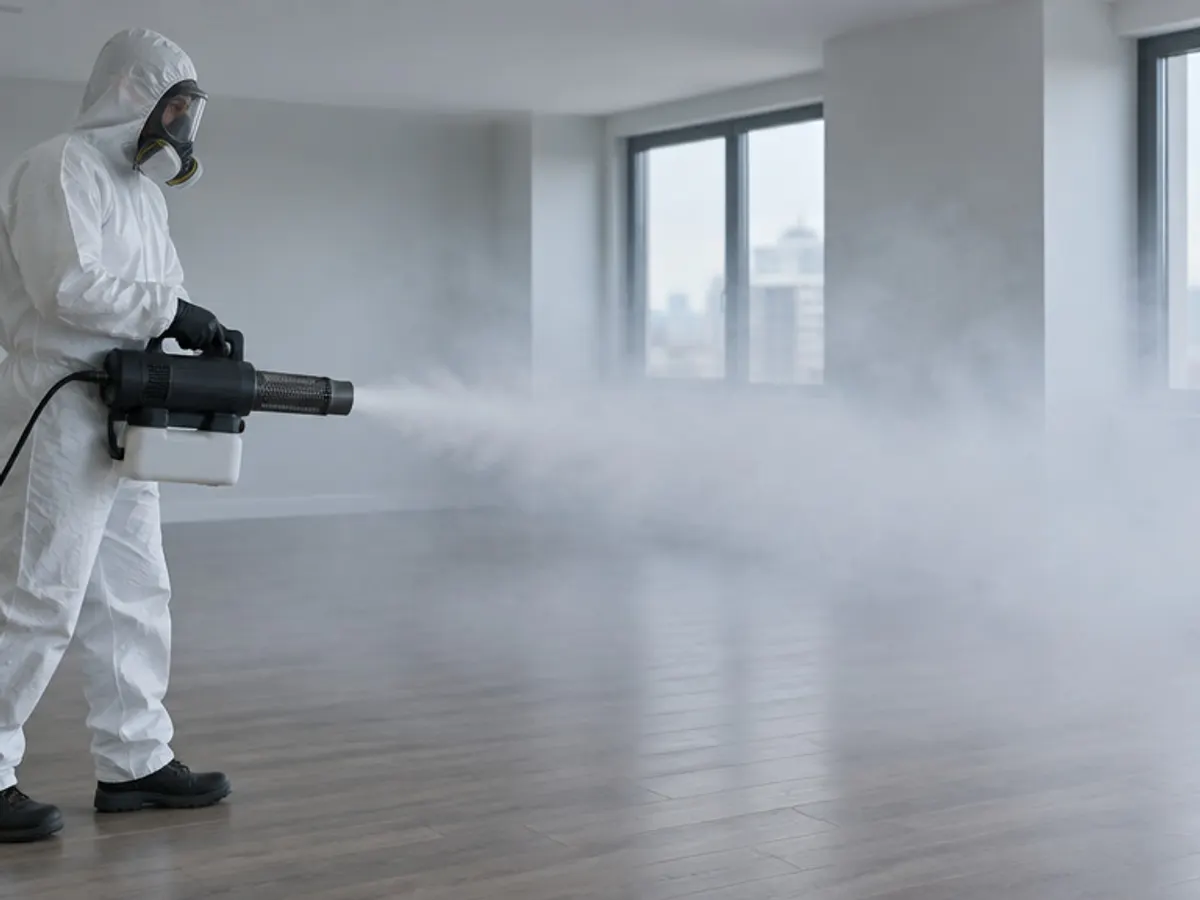
A technician fogging a room to neutralize smoke odor

Effective Smoke and Soot Damage Mitigation

Smoke and soot damage extends beyond what the naked eye perceives, seeping into walls, textiles, and your HVAC system. Our experts understand that smoke from different materials leaves distinct residues, such as wet smoke residue which is sticky and smells strongly, and dry smoke residue which is more powdery yet no less damaging. Protein residue from kitchen fires, often invisible, can discolor paints and tarnish metal finishes, making professional cleaning essential.

To combat these residues, our team employs advanced methods like dry sponge cleaning for walls and ceilings, or chem sponge for more delicate surfaces. Additionally, we use deodorizers and stain-blocking sealers to prevent recurring odors and stains. For smoke odor control, techniques such as thermal fogging and ozone treatments effectively neutralize lingering odors, restored to a state that feels fresh and clean. Air scrubbers and hydroxyl generators play a vital role in purifying the environment by filtering out airborne contaminants and odors effectively.

Our goal is to restore your home's air quality to a healthy level, ensuring both your structural safety and your family’s well-being. This thorough approach not only prevents future smoke odor penetration and sustains long-term habitat quality but also can enhance indoor air quality significantly, adding an extra layer of protection for inhabitants with allergies or respiratory concerns. We also offer duct cleaning services to ensure no residues are left in air pathways, a crucial step in ensuring full indoor air safety.

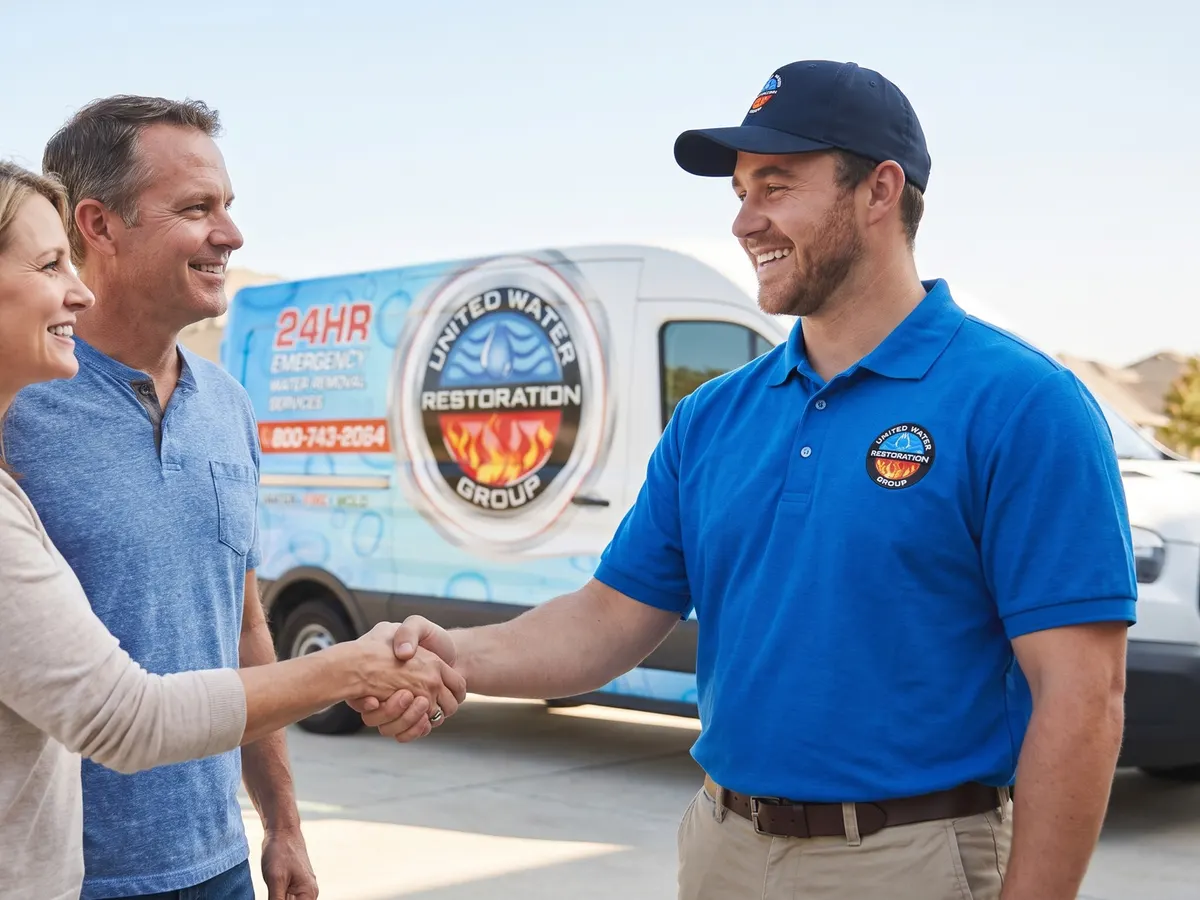
A UWRG technician shaking hands with homeowners beside the service van

Insurance Claim Navigation and Support

Navigating the complexities of insurance claims after fire damage can be daunting. At United Water Restoration Group of St. Louis - West, we provide our clients with comprehensive claim support. Our experienced team assists you in compiling necessary evidence, from the initial structural assessment to a detailed inventory of salvageable items. With each step of the restoration process meticulously documented, you can be confident in the accuracy and thoroughness of our reporting.

We coordinate with your insurance adjuster, ensuring all aspects of the restoration are documented accurately. This includes meticulous records of the pack-out and inventory of contents as well as electronics evaluations. Because proper documentation can make a huge difference in how smoothly the claim process transitions, we focus on creating clear and concise documentation that accurately reflects the scope and scale of the damages and needed repairs. This collaboration is crucial for maximizing your claim, facilitating a smoother and faster recovery process to get you back to your daily routine.

By ensuring all conditions and repair details are captured in our reports, we aid in expediting your claim process. Residents in regions like Earth City and Saint Ann can lean on our meticulous documentation and communicative approach for lessening the burden during a challenging time. For our clients, we stand ready to answer questions and make the claim process as straightforward and transparent as possible, turning what could be a stressful endeavor into a streamlined experience.

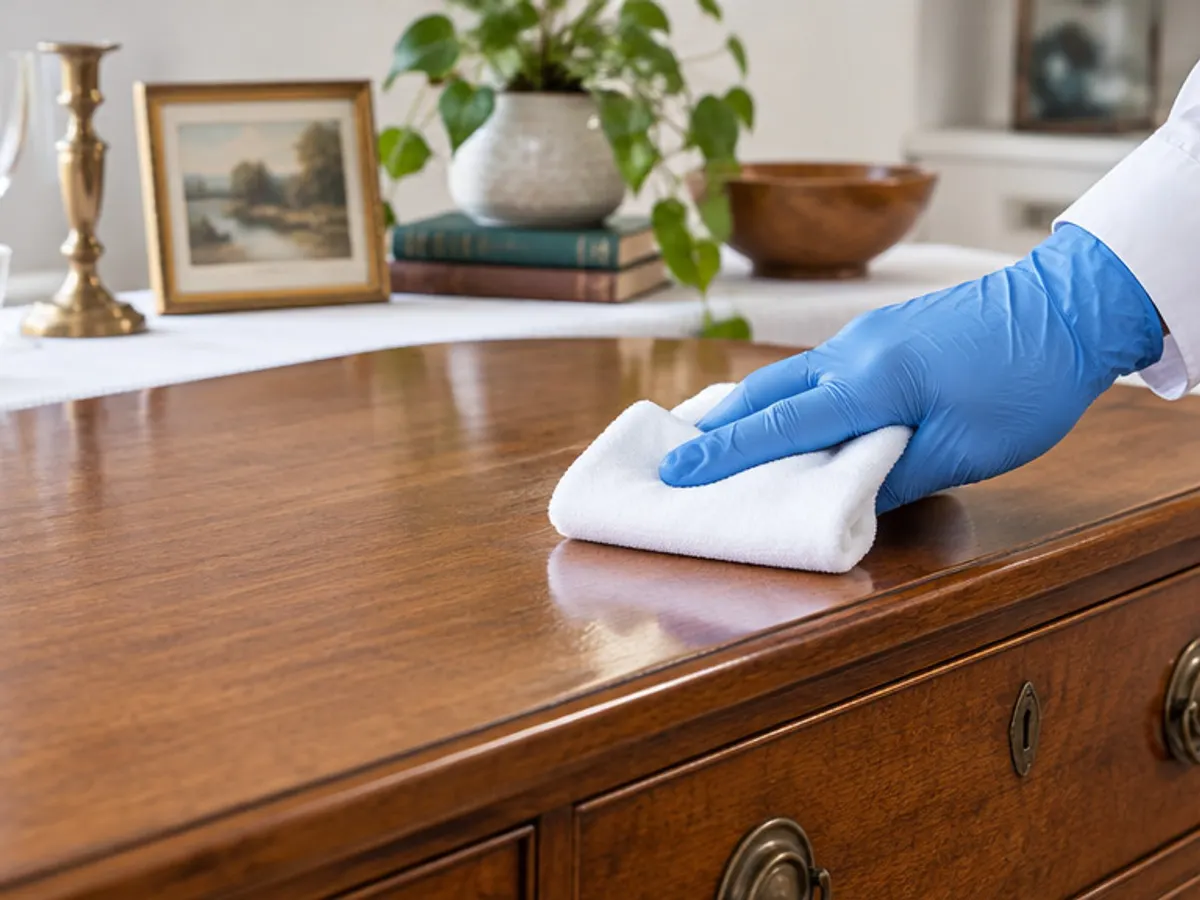
A technician wiping a cleaned, restored wood table to a polished finish

Specialized Restoration Techniques

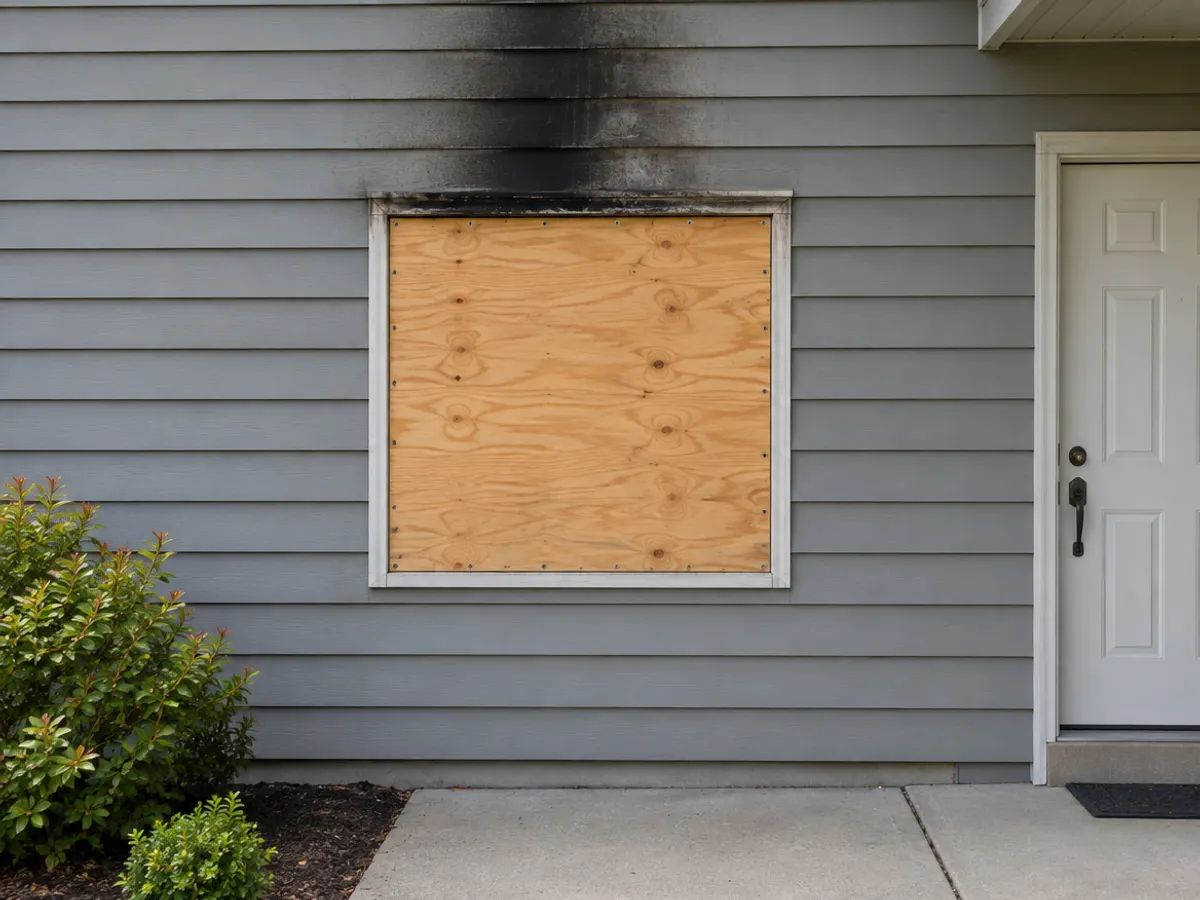
Our specialized restoration techniques are designed to address each unique challenge presented by fire and smoke damage, ensuring a comprehensive recovery. We offer board-up and emergency roof tarping services to protect your home from outside elements and premature deterioration during the restoration process. This immediate response is integral in preserving the remaining structure and contents from further exposure and potential damage during the restoration timeline.

The pack-out and inventory service we offer can help protect your valuable possessions. Items are carefully removed and documented, cleaned using industry-leading methods, and then stored securely until your home is ready for their return. This includes using an ozone chamber for the sanitation of contents deeply affected by odors, an essential step for items like textiles and electronics which are highly porous and can trap odors. Our duct cleaning service ensures that your HVAC system is not a hidden source of contamination, restoring clean air circulation throughout your home and preventing the recirculation of smoke residues.

Through these comprehensive techniques, we strive to not only regain the functionality of your home but also restore peace of mind to residents in Maryland Heights and surrounding areas after a fire. Additionally, our services extend to structural cleaning where necessary, utilizing techniques that preserve building materials while ensuring thorough cleaning and sanitation. By addressing every aspect of fire and smoke damage restoration, from structural assessments to final deodorizing, we commit to a restoration process that is as complete as it is considerate, tailored to the unique needs of each scenario.

Common Causes We See in St. Louis - West

  • Kitchen fires, often resulting in severe smoke and protein residues.
  • Electrical fires, frequently affecting wires and insulation.
  • Chimney fires, spreading soot and affecting the attic.
  • Candle mishaps, leading to localized but pervasive smoke damage.
  • Arson or malicious fires, generally extensive damage.
  • Portable heater fires, commonly in winter months.
  • Cigarette-related incidents, often restricted to one area.
  • Lightning strikes, occasionally targeting roof structures.
  • Appliance malfunctions, causing small but smokey fires in kitchens.
  • Barbeque pit accidents, usually affecting outdoor areas but spreading indoors.

While You Wait for the Crew

A few minutes of the right first moves can save thousands in damage. Here is what to do — and what not to do — before we arrive.

Do

  • Open windows for ventilation if safe to do so.
  • Document the damage with photos before touching anything.
  • Limit movement inside to prevent soot particles from spreading.
  • Remove pets and children from the affected area to avoid exposure.
  • Contact your insurance provider promptly to start your claim process.

Don’t

  • Do not use or attempt to clean electronic devices until evaluated.
  • Avoid washing walls or cleaning surfaces without professional guidance.
  • Refrain from using furniture or seating where residue is present.
  • Do not turn on HVAC systems as they may spread soot.

Crews are standing by in St. Louis - West right now.

Call (314) 455-5900

How It Works

Here Is What Happens When You Call

The hardest part of property damage is facing it on your own. You do not have to — from the first phone call, it is our job, not yours.

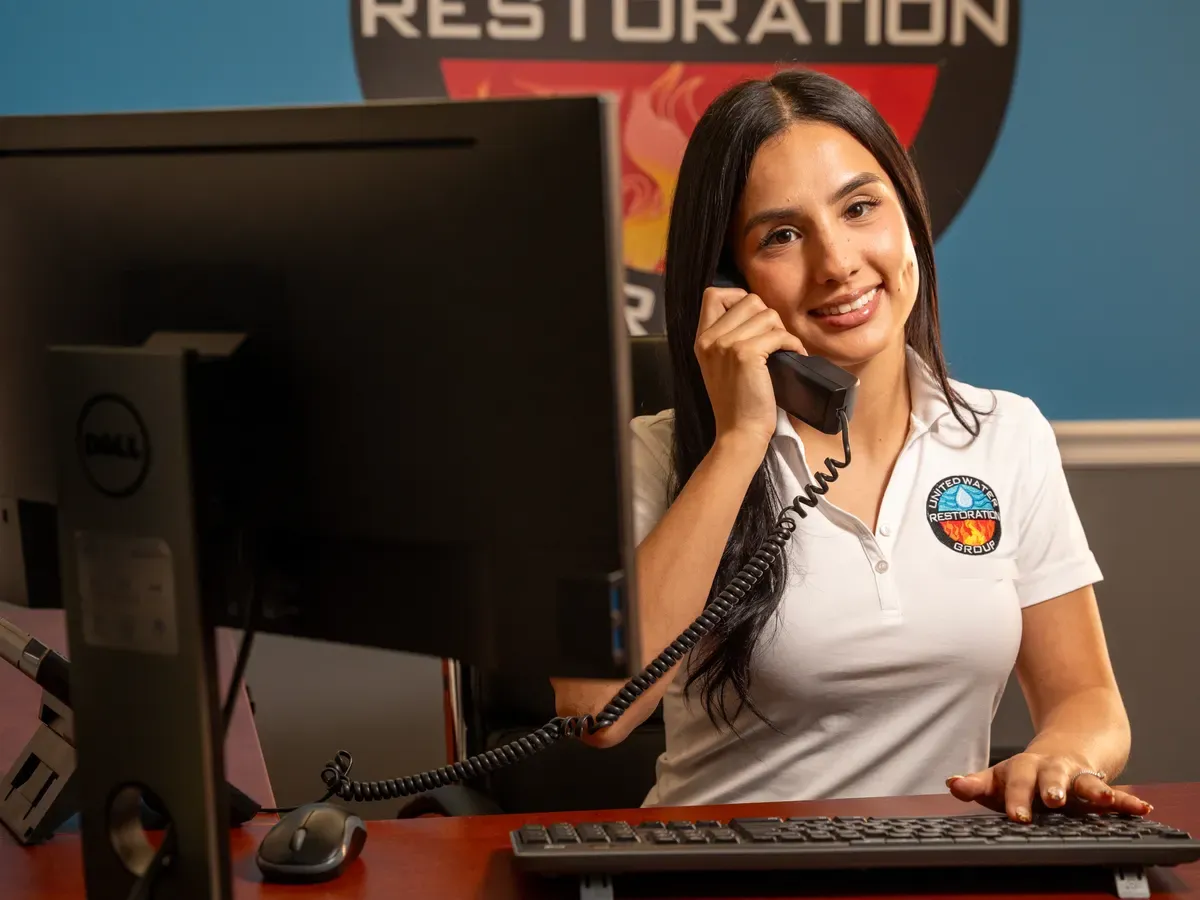
  1. A UWRG dispatcher answering an emergency call at her desk

    Step 01

    Emergency Contact

    Upon receiving your call, our crew is dispatched quickly to mitigate immediate threats and plan the initial response. This starts the essential process of damage limitation and preparation for full-scale restoration.

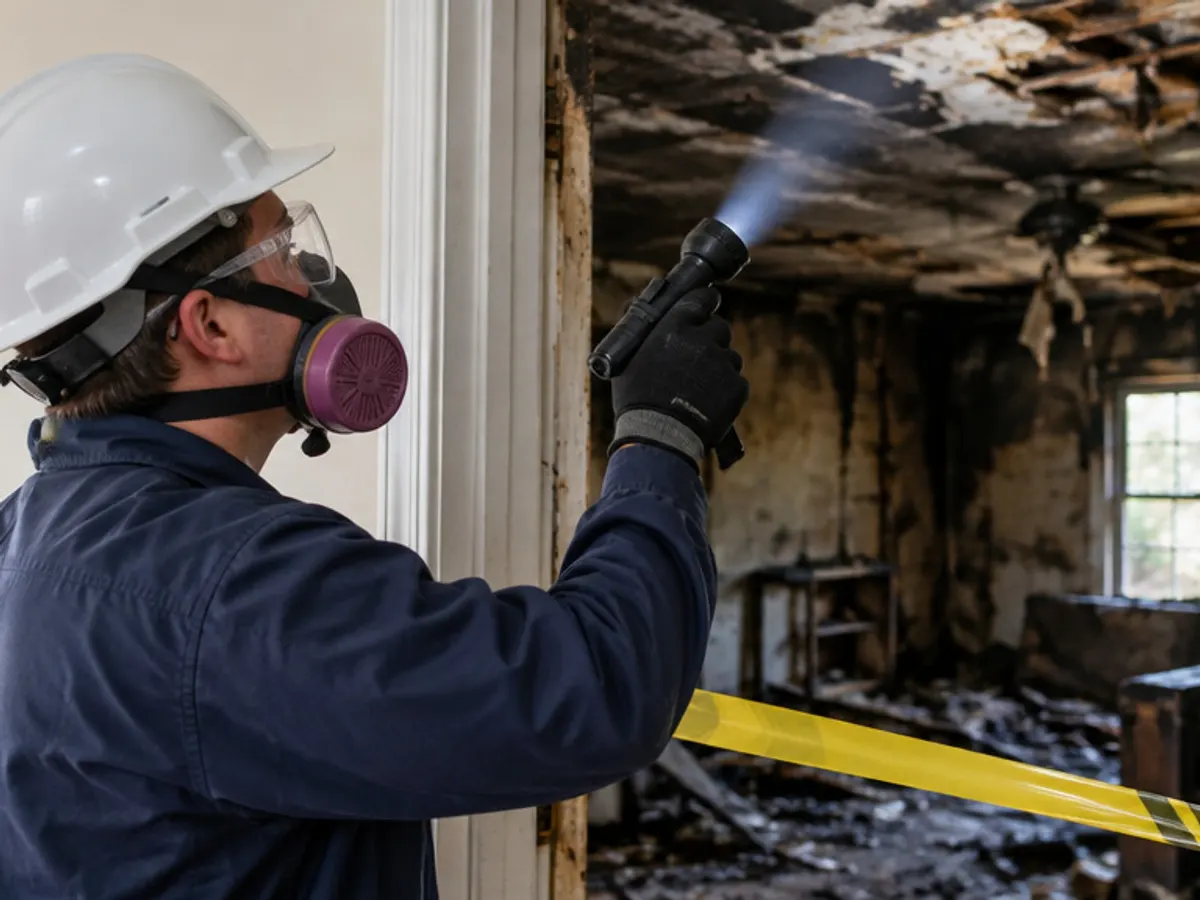
  2. A technician in a respirator inspecting a fire-damaged room with a flashlight

    Step 02

    Detailed Inspection

    We perform a comprehensive inspection, documenting the fire’s impact and planning out a structured recovery that considers both immediate needs and long-term restoration strategy. This includes identifying areas that may suffer from residual smoke damage.

  3. A fire-damaged window boarded up with plywood

    Step 03

    Board-Up & Tarping

    This protective step secures vulnerable areas against weather, preventing further structural and interior damage. Temporary protection is a crucial precursor to in-depth restoration work.

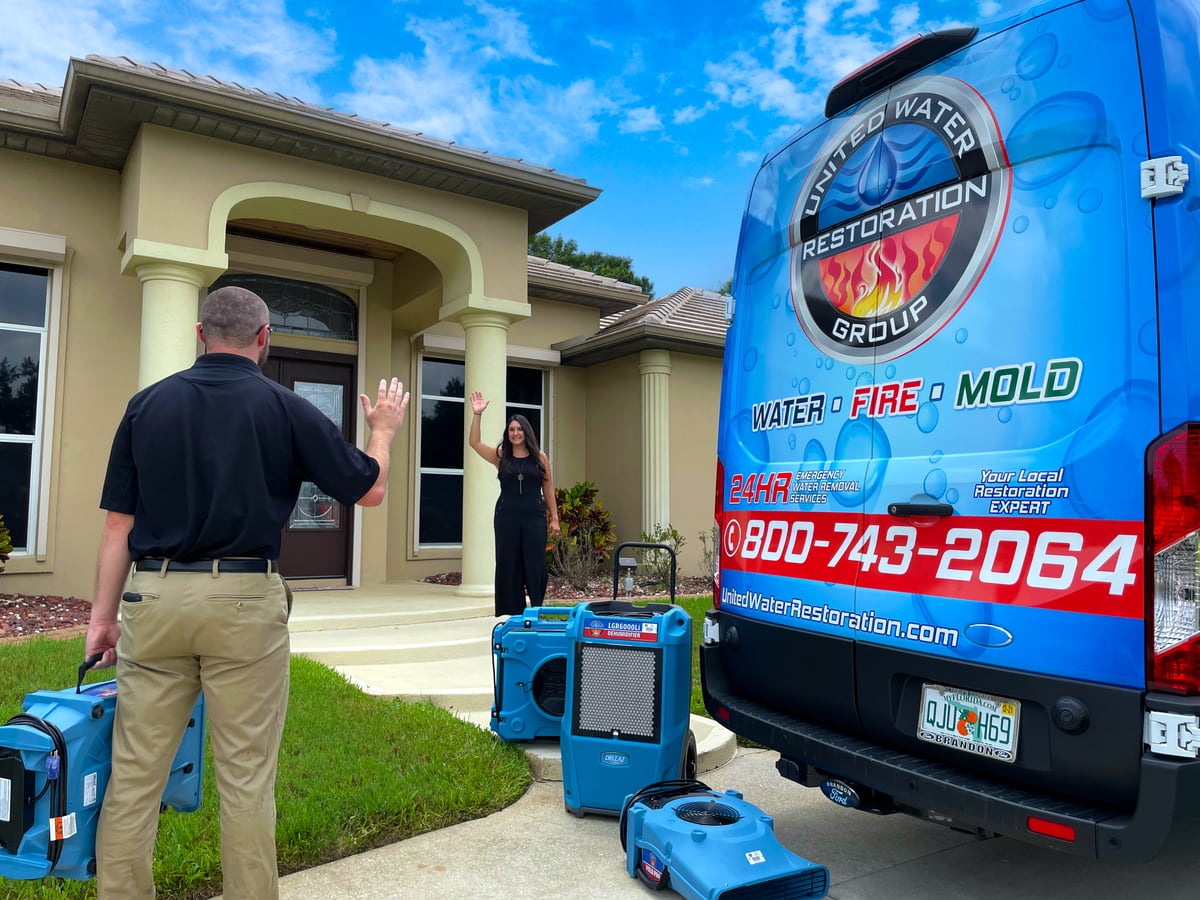
  4. A technician carrying equipment back to the van, waving to the homeowner at her door

    Step 04

    Water Damage Mitigation

    Addressing firefighter water usage, we remove excess water to avoid mold formation and structural issues. Water removal is prioritized immediately to prevent secondary waterborne damages.

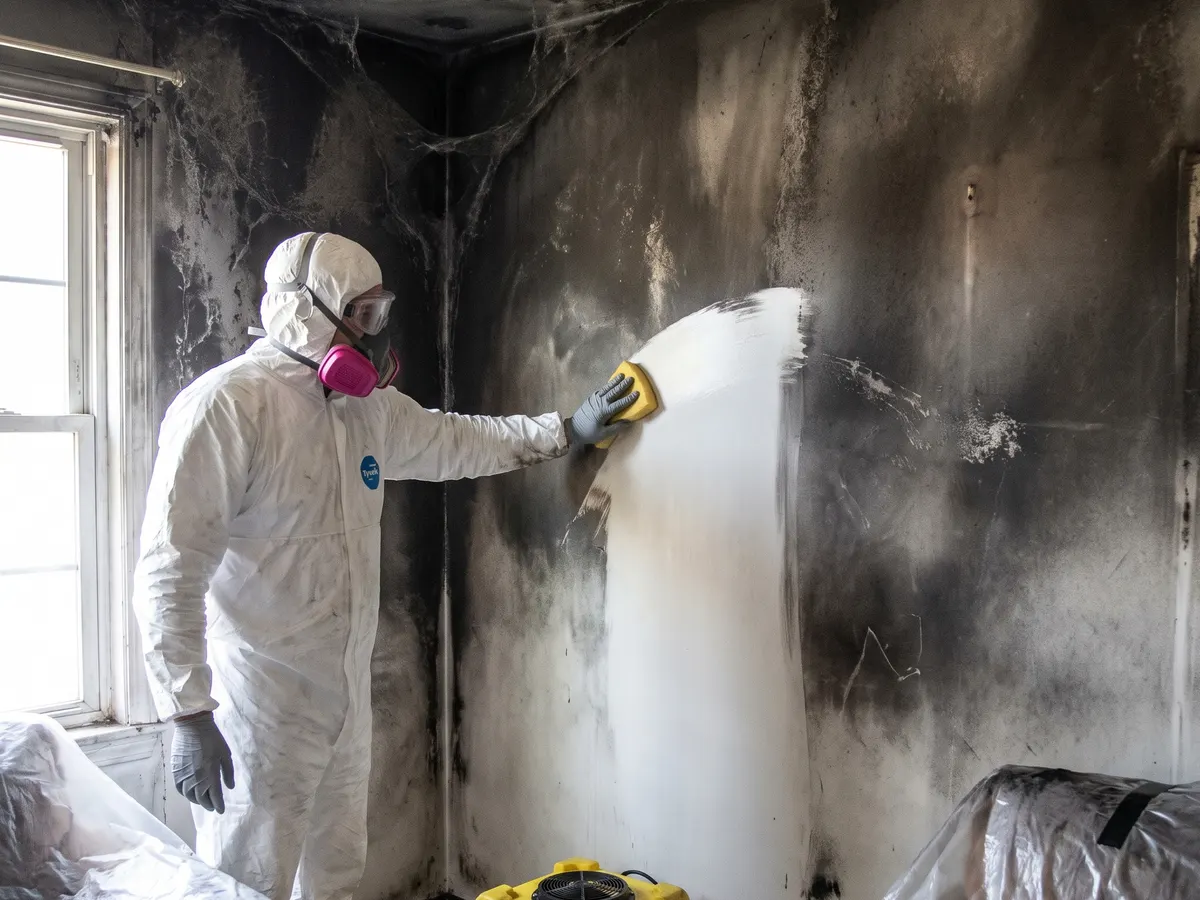
  5. A technician in protective gear sponging soot off a wall

    Step 05

    Soot & Smoke Removal

    Using specialized cleaning agents and tools, we eliminate residues from surfaces, preserving your home’s integrity. This thorough removal process is designed to restore indoor air quality and eliminate all residues.

We Work With Your Insurance

Restoration is stressful enough without fighting through a claim alone. Our crews document everything — photos, moisture readings, and a clear scope of work — in the format adjusters expect, and we communicate with your insurance company throughout the job. You always know what is happening and what your policy covers before work begins.

AllstateState FarmLiberty MutualProgressiveNationwideFarmers InsuranceAmerican Family InsuranceChubbUniversal Property & CasualtyHeritage Insurance
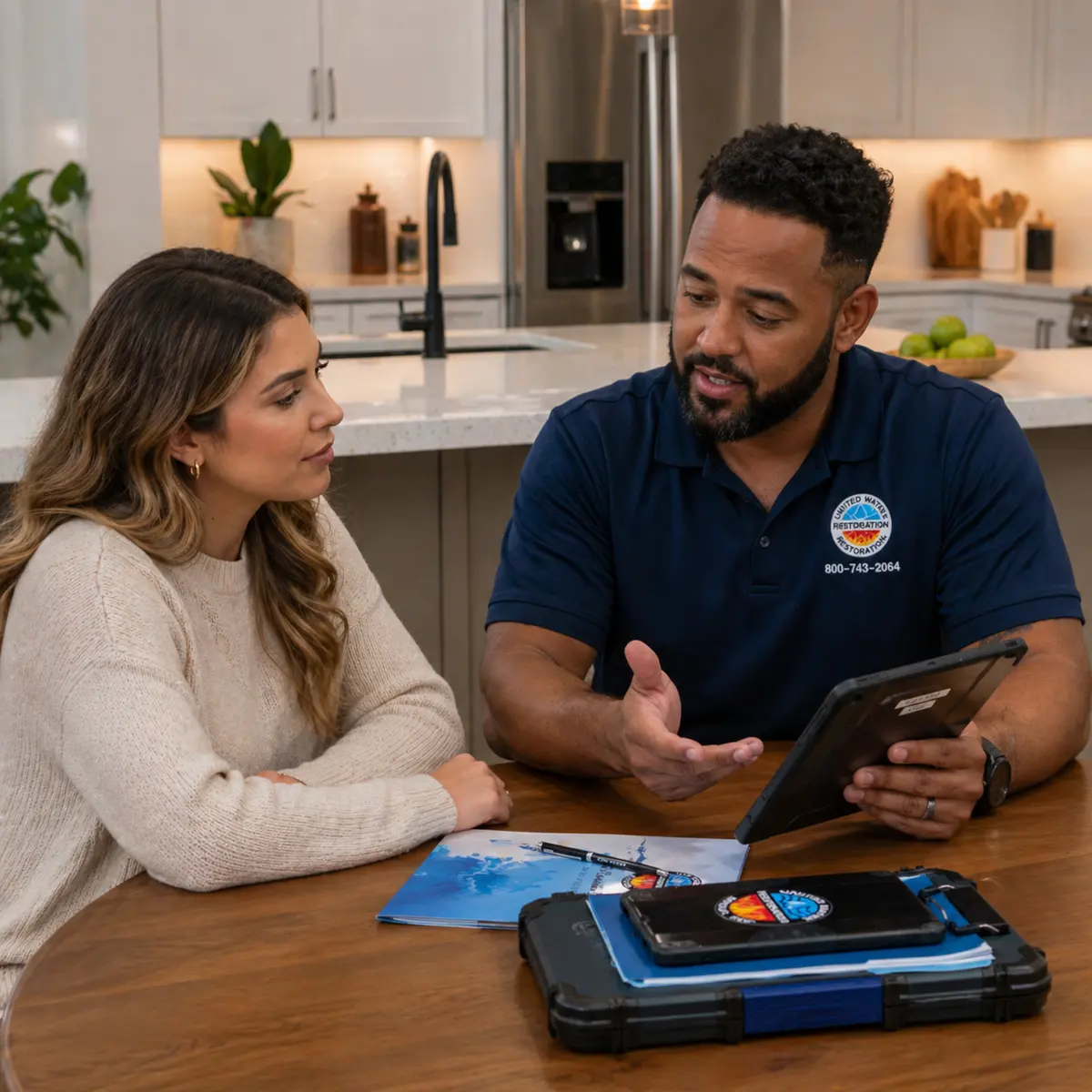
Technician walking a homeowner through the insurance scope on a tablet

What This Service Covers

Structural damage repairSoot and residue cleanupSmoke odor removalHVAC system cleaningBoard-up and tarpingContents pack-out and inventoryInterior cleaning and deodorizingElectronics and furniture evaluationInsurance claim assistanceWater damage restoration

When disaster strikes, let United Water Restoration Group of St. Louis - West be your first call for rapid and reliable fire and smoke damage restoration. Our comprehensive service and attention to detail ensure you can focus on safety and recovery while we handle the rest. We use precise and industry-leading techniques to address your home’s urgent needs effectively. No matter if you're in Chesterfield or close to Saint Ann, our experts are ready to assist. Contact us at (314) 455-5900 and guarantee your home’s thorough restoration.

Frequently Asked Questions

Do you handle fire and smoke damage restoration, or only water damage?

Both. Fire and smoke work is its own discipline with its own standard, ANSI/IICRC S700, covering soot removal, odor control and the cleaning of surfaces flame never touched. Smoke residue sorts into four types — dry, wet, protein and fuel oil — each cleaned differently, so the scope comes from an inspection of your specific loss rather than from a list set in advance. Water damage follows a separate standard, S500, and many fire losses involve both.

Can smoke smell from cigarettes or marijuana actually be removed, or only covered up?

Masking fails because smoke odor is residue sitting on surfaces, not air. Deodorization works in four stages: remove the source material, clean every surface holding residue, treat what remains, then seal what cannot be cleaned. ANSI/IICRC S700 puts source removal before any sealing, and that holds for tobacco or cannabis alike. The EPA and CDC describe residual tobacco smoke settling into walls, carpet and dust long after the smell fades. Heavy saturation often means replacing some materials, and every house differs.

Can you keep the smell from spreading to the rest of my house while you work?

Containment comes first, before any cleaning. The work area is sealed with sheeting and held under negative pressure so air moves into the zone rather than out into the rest of the home, then exhausted through HEPA filtration, which captures 99.97 percent of particles at 0.3 microns, the hardest size to catch. IICRC S520 describes the same containment principle for mold work. How much enclosing a home needs, and how completely it holds, depends on how far residue already traveled.

How do I tell whether a smell is on the surface or coming from inside the wall?

Press a damp white cloth on a hidden patch. If residue transfers and that spot goes quiet, it was surface odor. If it returns a day or two after cleaning, or sharpens when the heating and cooling system runs, the source sits in a wall cavity, insulation or ductwork. ANSI/IICRC S700 treats odor as residue to be located, not covered, and protein residue leaves almost no visible mark while carrying strong odor, so a cloth coming back clean does not rule it out.

Is the estimate free, or do you charge to come out and inspect?

Having someone come out and look at the damage carries no charge in most cases. That visit is what sets the scope: which of the three water categories in ANSI/IICRC S500 applies, how far it migrated, and what has to be dried. A written estimate is separate work, and depending on the office, preparing one may carry a fee. You are told what is chargeable before anything is charged.

When can someone come out, and can work start on the first visit?

The phone is answered around the clock, and on that call you are given an honest arrival window for your specific address rather than a stock answer. The visit is not a sales appointment — crews carry extraction and drying equipment, so when the situation calls for it emergency work can begin on the first visit: standing water pulled out, air movers and dehumidifiers set, and the wet area mapped against a dry standard under ANSI/IICRC S500.

How much does restoration cost?

Nobody can price a loss honestly without seeing it. The number is built from measured facts: the square footage affected, how much material has to come out, the water category — 1 through 3 under ANSI/IICRC S500 — and how many days of drying equipment the structure needs. Most carriers settle water claims against Xactimate's regional price list, the same line-item data a properly written estimate uses. A contained spill and a loss that soaked three rooms are not in the same range.

What kinds of damage and cleanup do you handle?

Water damage is the bulk of the work, across all three categories ANSI/IICRC S500 defines — clean supply water, gray water, and sewage. Fire and smoke work covers soot, char and odor. Mold remediation follows IICRC S520. Storm and wind damage, contents cleaning for furniture and belongings, and the reconstruction that puts drywall, flooring and cabinetry back are all in scope, though what each office handles in-house varies. Plumbing, roofing and electrical repairs are separate trades.

Can you give me a price range over the phone, or quote from photos or a report I already have?

Photos and a report you already have are genuinely useful — bring them, they shorten the visit. What they cannot do is produce a number, because what drives the scope is moisture inside material you cannot photograph. ANSI/IICRC S500 works from meter readings against a dry standard in the same building, and from the water category: Category 1 can often be dried in place, while Category 3 means contaminated material comes out instead. A range quoted sight-unseen is a guess, and guesses move.

Do you work with insurance companies — can you bill my insurer directly, or do I pay and get reimbursed?

Direct billing to the carrier is common on covered losses, arranged once the claim number and adjuster are in hand, so you are not fronting the whole job. Carriers generally review water losses as Xactimate line items rather than a lump sum. How it runs depends on your policy — some issue payment to you and your mortgage holder rather than the contractor, which changes the paperwork but not the scope. You are told which arrangement applies before work starts.

Do I need to call a plumber first, or do you stop the leak too?

Turning the water off at the main comes first, if you can reach it safely, because that is what stops the loss from growing. Repairing the failed pipe, fixture or roof is plumbing or roofing work and usually a separate trade. Mitigation does not have to wait on that repair: ANSI/IICRC S500 treats source control and structural drying as distinct steps, so extraction and drying can start while the plumbing is still being scheduled.

What should I do right now, before the crew arrives?

Shut off the water at the main and kill power to the affected area at the breaker if you can do it from a dry spot — never standing in water. Lift what you can off wet flooring, especially anything wood, paper or upholstered, and pull rugs up. Blot or wet-vac standing water if it is clean. The clock is real: EPA guidance is that wet material dried in the first 24 to 48 hours will in most cases not grow mold.

Will I get a written estimate before work starts, and how soon after the visit?

Emergency mitigation usually starts on a signed work authorization covering extraction and drying, because waiting on paperwork while water sits makes the loss bigger. The line-item estimate follows, and when it lands depends on the size of the loss and whether a carrier is reviewing it; the office can give you a realistic date on the call. The daily moisture readings ANSI/IICRC S500 requires are what justify each line, and a scope that grows gets a revised estimate.

What are your hours — do you work nights and weekends, and does that cost more?

The phone is answered around the clock, including nights, weekends and holidays, because a loss found at night only gets worse while it sits, and on that call you are given an honest arrival window for your address. After-hours labor is a recognized line item in Xactimate, the pricing data carriers settle against, so where it applies it shows on the estimate like everything else rather than as a surprise. Whether it applies to your situation at all is said plainly up front.

If this isn't something you handle, can you point me to someone who does?

Ask on the call and you will get a direction rather than a dial tone. Some work genuinely belongs elsewhere: a plumber for the pipe itself, a roofer for the roof, an HVAC contractor for a condensate or duct problem, and for mold an independent indoor environmental professional, since IICRC S520 flags the conflict of interest when the same firm both assesses and remediates. Saying so plainly is more use to you than a visit that goes nowhere.

Does homeowners insurance cover this, and will I still owe my deductible?

Most policies cover sudden, accidental water damage and exclude damage that developed gradually, and the wording varies from policy to policy — read your own and ask your adjuster directly rather than assuming it either way. Your deductible applies regardless and cannot be waived, discounted or absorbed into the invoice. Anyone offering to do that is describing insurance fraud.

Should I call my insurance company first, or get you out first — and does the work wait for their approval?

Either order works, and many people do both back to back. What should not happen is drying waiting on a claim decision. EPA guidance puts the mold window at 24 to 48 hours for wet material, and most policies place a duty on the homeowner to prevent further damage, which is why emergency mitigation proceeds on your own authorization while the claim is still being opened. The readings and photos taken at the start are what the adjuster reviews later.

Is anything due up front, what payment methods do you take, and do you offer payment plans?

On an insurance claim the usual pattern is that your deductible is collected and the carrier's payments cover the rest as work is approved, which usually means no large sum is due before mitigation begins. Self-pay jobs are structured differently and often staged between drying and repairs. Card, check and ACH are normally accepted, some offices can arrange terms, and any processing fee is disclosed before you pay. What applies to you is in writing before you sign.

What information do you need from me to get started?

The basics are the address and how to get in, a callback number that reaches you, what you know about the source and when it started, and whether power and water are still on. If a claim is open, add the carrier, policy and claim number and the adjuster's details. Photos taken before anything was moved matter more than they look: ANSI/IICRC S500 scoping rests on documented conditions, and the earliest record cannot be recreated later.

Will you document the damage for my claim and deal with my adjuster, or do I handle that?

Documentation is part of the job, not homework for you. Moisture readings, photographs, affected material measurements and daily drying logs are produced as the work goes, because ANSI/IICRC S500 expects drying to be verified against a dry standard rather than declared. You can ask for copies of all of it. Discussing scope with an adjuster who is limiting it is normal, though the carrier makes the coverage decision and the policy sets the limits.

Is it safe for my family to stay in the house while this is going on?

That depends on what the water is and what it reached, and it is assessed first. ANSI/IICRC S500 sorts water into three categories, and Category 3 — sewage or heavily contaminated water — is treated as a containment job with restricted entry. The EPA and CDC describe mold and sewage exposure as a greater concern for infants, older adults and people with asthma or weakened immune systems. Clean-water losses confined to one area often allow normal occupancy; ask about your own rooms.

Can you still help me if I don't have insurance, or don't want to file a claim?

Self-pay customers are welcome, and plenty of people choose that route deliberately when the likely scope sits near or under their deductible or they would rather not have a claim on record. The work itself does not change — the same ANSI/IICRC S500 drying standard, the same readings, the same verification. What changes is the paperwork and the payment arrangement, which the office walks you through, including how the scope can be staged if that helps.

Request Service Online

Tell us what happened and we will call you right back. For emergencies, calling (314) 455-5900 is always fastest — we answer 24/7.

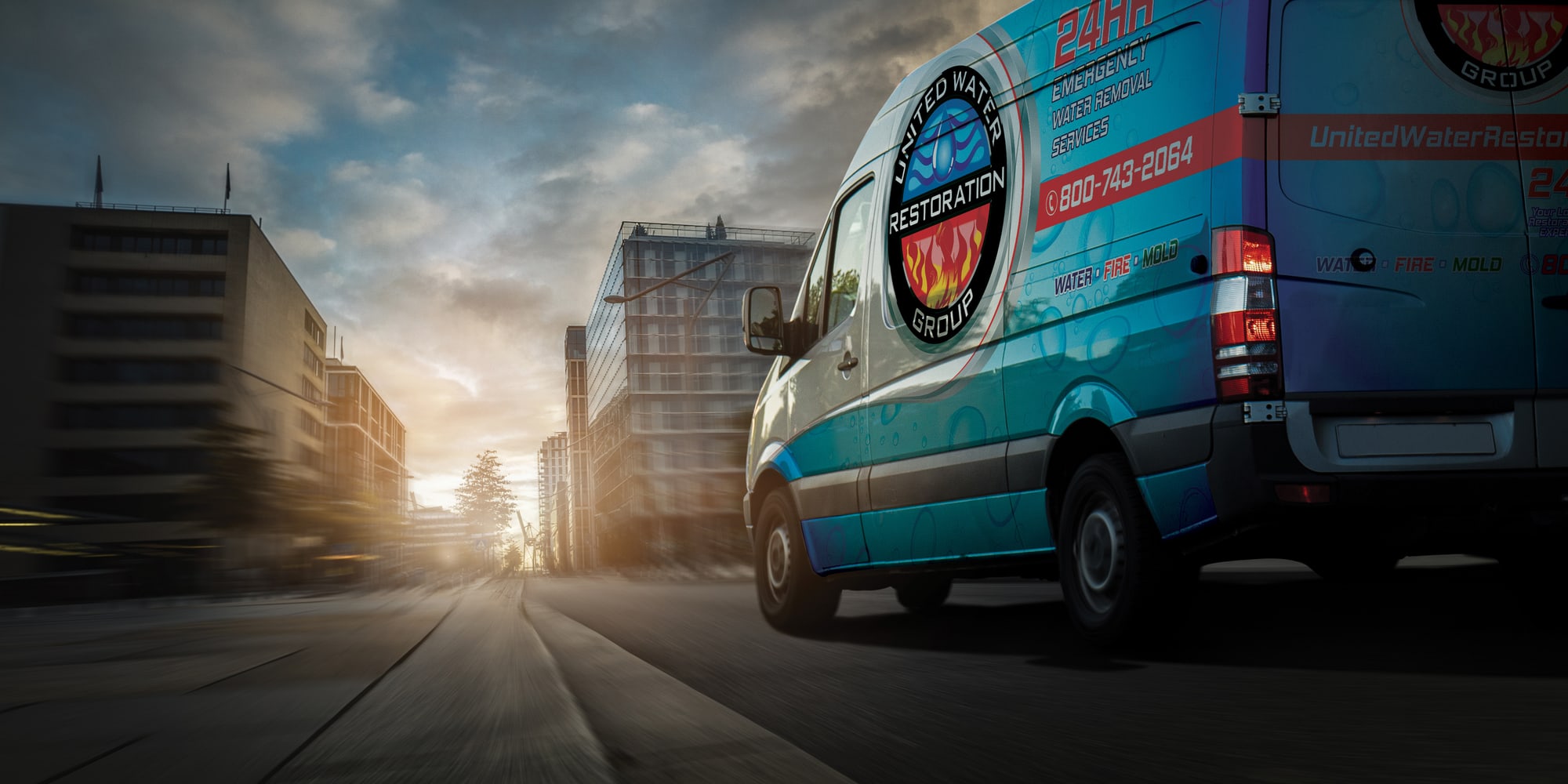
A United Water Restoration Group of St. Louis - West van heading out on an emergency call at sunset

In Case of Property Damage, Call:

314-455-5900

We answer around the clock and dispatch from right here in St. Louis.

IICRC Certified · Water · Fire · Mold · 24/7 Emergency Response